
The recent and ongoing uptick in the occurrence of natural disasters, wildfires, mudslides, desertification, wars, mass-migration, famine, and economic recession, has renewed interest in finding real solutions to these problems. The solutions are found outside the typical inefficient government or corruption-plagued non-profit/NGO and international bureaucracy-led initiatives.
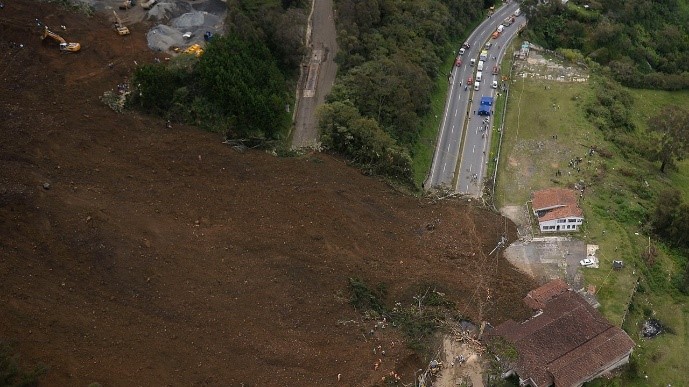

For decades, independent researchers and consultants known as Permaculture Designers have worked in restoring degraded lands, reversing desertification, designing local, natural and organic farming and gardening systems. Building with natural and non-toxic materials, harvesting and recycling water, creating zero-waste systems, mitigating the effects of natural disasters, designing local economic and community structures, and regenerating ecosystems. This design science incorporates both traditional indigenous knowledge and modern, regenerative systems and technologies.
As the solutions are necessarily multidisciplinary in nature, they encompass knowledge and techniques from Natural Resources to Ecology to Forestry to Hydrology to Regenerative Agriculture, Natural Building, Ecological Economics, Sociology, and more. Training in Permaculture Design (also known as Ecological Design and Regenerative Design) is not typically available through conventional college and university systems. There is a very good reason for this.
Universities are designed to train specialists. Increasing focus on specialization over the past 50 years has resulted in professionals who can no longer converse or share research with those outside their discipline. Universities do not produce well-rounded “generalists” who are able to draw from several disciplines (cross-disciplinary or multi-disciplinary) to solve problems. Instead, they provide “institutional silos” with little contact or collaboration with other colleges and disciplines. Much has been written about these pathologies within conventional (especially Western) academia. Those trained in Economics rarely interact with those training in Sociology. Business students do not cross-pollinate their studies with Law or Ecology. Fields of study that incorporate knowledge and experience from several academic disciplines are traditionally not offered through conventional college and university systems because of historical notions placing value on memorization of theories instead of experiential learning, and focus on specialization of knowledge without integration.
Professionals working in the field will always prefer hands-on experiential learning and knowledge that comes from weaving together related disciplines, rather than relying on theories learned from reference materials written by individuals with little or no practical experience. The historical university educational model is currently being turned on its head – by necessity. We need interdisciplinary thinking (systems thinking) to address the multiple-systems-breakdown we are now experiencing.
Intentionally operating outside this “institutional silo” model of specialized academic training, an independent global movement of practitioners has taken up the work of integrating knowledge from many related disciplines to supply solutions to real-world problems on the ground.
This movement includes not only current and former academics, but also highly skilled researchers and teachers from various disciplines, including farmers, gardeners, ecologists, builders, foresters, homesteaders, economists, and people from all walks of life.
Permaculture Designers adopt “systems thinking” to design solutions to improve agricultural systems, mitigate the effects of drought, regenerate degraded landscapes, design and protect properties, incorporate renewable energy systems, create stable land-based livelihoods, and establish integrated and ethical local economic and social structures.
In the wake of natural disasters, Permaculture Designers have mobilized to offer solutions that can both prevent and mitigate such disasters in the future. However, because Permaculture Designers are traditionally trained outside the conventional college and university systems, their solutions are not always given the merit and attention they deserve.
This is very unfortunate because Permaculture Designers bring with them the knowledge, experience, and proven models from working in the most challenging environments across the globe. The knowledge and experience they bring to the table are far more valuable to humanity today than any false solutions being discussed in corporate-controlled mainstream media or theories proffered in conventional colleges and universities.
For example, designing farms, community developments, and even businesses in arid environments necessarily involves thinking about the possible effects of drought and wildfires (among many other factors). Incorporating design solutions for the provision of water to support agricultural systems and human needs is of paramount importance in these regions.
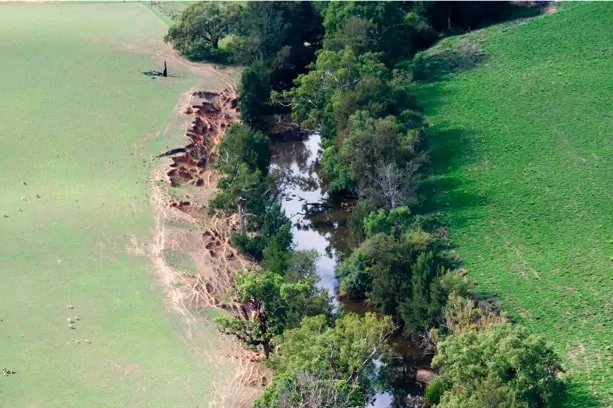
In consideration of this, Permaculture Designers will proceed with employing design ideas from tried-and-true systems such as Keyline Design (see pic above), Earthworks (dams, swales, berms, ponds, fire-mitigation strips), water storage and recycling systems, Ecological Restoration techniques. Reforestation techniques to prevent mudslides and erosion, and introducing fire-resistant and drought-tolerant plant and tree species.
If some of the farm, commercial and residential developments in drought and disaster areas had been intentionally designed with these strategies from the start, we would not be witnessing the incredible level of destruction of life and property we see today. Many of these disasters are exacerbated by poor design of both human settlements and agricultural systems.
Since the early 1980s, independent Permaculture Designers and consultants have led both large-scale and small-scale projects that have transformed landscapes into highly-productive and resilient ecosystems that provide for human needs, reduce human work, mitigate and minimize erosion, build soil, store water, support wildlife, and create stable local livelihoods.
Training in Permaculture Design is accomplished through the 72-hour Permaculture Design Certificate Course, also known as the PDC course. There are options for attending 2+ week residential on-the-ground courses and also online certification courses. One of the leading providers of this course worldwide is the International Permaculture Education Center at PermacultureEducation.org
Unlike the conventional college and university education model of learning, education in Permaculture Design is completely decentralized. There is no head governing body or leading organization. The movement was designed this way intentionally by its founders – Bill Mollison and David Holmgren.
Permaculture Designers are self-governed by the global community of practitioners and local guilds, and are expected to closely follow the teaching and consulting directives set out by the founders. The majority of teachers and consultants honor and follow the directives, but there are exceptions – so it is important to inquire about the skills and qualifications of Permaculture Designers you intend to work with and/or obtain training certifications from.
Upon completion of the Permaculture Design Certificate Course, there are numerous options for advanced training from teachers around the world. These include:
- Regenerative Organic Agriculture (farming and gardening)
- Agroforestry
- Aquaculture
- Water Harvesting and Earthworks
- Ecological Building/Natural Building
- Ecological Economics
- Ecological Restoration
- Renewable Energy Systems Design
- Social and Community Structures
- Intentional Community and Ecovillage Design
- and more.
Increasingly, the profession of Permaculture Design is being recognized for the common-sense design solutions it offers, all of which are directly applicable to the environmental changes and societal challenges we see in the world today.