
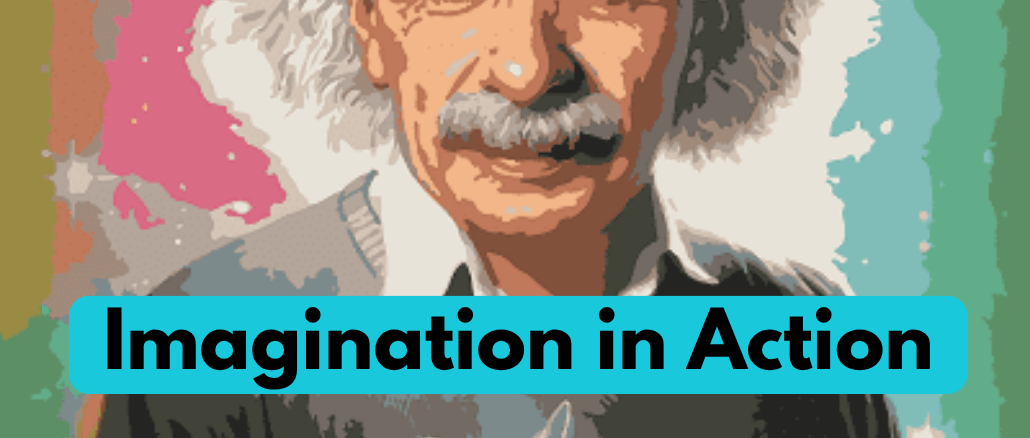
 The greatest barrier to a better world may not be technology, money, or policy. It may be our inability to imagine anything beyond the broken systems we inherited.
By Steven Jay, Founder, Mobilized News
We are living through a global crisis of imagination. Not because better futures are impossible.
Because too many people have been trained to believe that the systems we live under — extractive economies, centralized power, failing institutions, endless competition, ecological destruction, media confusion, and political paralysis — are normal, permanent, or inevitable.
They are not–and the sky is not the limit.
The real limit is the story we have been taught to accept.
“As men and women, we must proceed as if the limits to our imagination do not exist. We are collaborators in creation.” –Pierre Teilhard de Chagrin
Humanity is not suffering from a lack of solutions. We are suffering from a lack of shared imagination, public trust, and operating systems capable of helping people see what is possible — and act on it.
The crisis of imagination keeps people trapped inside systems that no longer serve life.
Mobilized News was created to help people see the world as it is — and what it can become.
- We cannot build what we cannot imagine.
- Before every breakthrough comes a shift in perception.
- Before flight, humans had to imagine leaving the ground.
- Before democracy, people had to imagine rule beyond kings.
- Before public health, people had to imagine prevention instead of resignation.
- Before renewable energy, people had to imagine power without extraction.
- Before the internet, people had to imagine connection beyond geography.
- Every system we live inside began as an idea.
- So did every system that is failing us now.
Why it matters:
If our imagination is colonized by fear, scarcity, cynicism, and institutional failure, then the future becomes a recycling machine for the past.
So, what is the imagination crisis?
We have more tools than ever — but less collective vision.
Humanity now has extraordinary capabilities: clean energy, regenerative agriculture, circular design, AI, open knowledge, precision fermentation, digital democracy tools, community finance, decentralized media, and public health intelligence.
But many people still ask:
“What can I do? Who am I to change anything? Isn’t this just the way things are? Why bother if leaders are not listening? What if nothing works?”
- These questions are not signs of weakness.
- They are signs of a society that has trained people to feel powerless.
Why the crisis of imagination exists
- It comes from systems designed to manage people, not liberate them.
- The crisis of imagination did not appear by accident.
- It comes from decades — and centuries — of systems that reward obedience, repetition, fear, and dependency more than creativity, cooperation, and civic courage.
Where it comes from
- Industrial-age education taught many people to memorize, comply, compete, and fit into predefined roles.
- Corporate media systems often amplify crisis without showing pathways to action, leaving people informed but immobilized.
- Political systems train people to wait for leaders instead of organizing where they are.
- Economic systems tell people their value is measured by productivity, consumption, status, and survival.
- Colonial and extractive systems taught societies to dominate nature instead of learning from it.
- Digital platforms often trap attention inside outrage, comparison, fear, and distraction.
- Institutional failure creates learned helplessness: people stop expecting systems to work, so they stop imagining that they can.
This results is a public that can describe the crisis in detail — but struggles to picture the next operating system.
- What prevents people from imagining something better?
- The old system teaches people to confuse realism with resignation.
- Many people are not lacking creativity. They are carrying invisible constraints.
Mobilized News is seeking the stories of Imagination in Action. Please contact us here for consideration. Thank you.
The main blockers:
Fear
- Fear of failure.
- Fear of ridicule.
- Fear of losing stability.
- Fear of being called unrealistic.
Fear narrows the mind. It forces people to protect what exists, even when what exists is harming them.
Scarcity thinking
- When people are stuck in survival mode, imagination becomes a luxury.
- Bills, burnout, debt, insecurity, and crisis fatigue make it difficult to dream beyond the next emergency.
Cynicism
- Cynicism often disguises itself as intelligence.
- But cynicism is not wisdom. It is wounded imagination.
- It says: “Nothing will change,” because believing change is possible would require responsibility.
Institutional dependency
- Many people have been trained to believe that only governments, corporations, experts, or powerful people can create change.
- This keeps communities waiting for permission.
Media overload
- A person can now know about every crisis on Earth before breakfast.
- But without context, pattern recognition, and action pathways, information becomes paralysis.
Loss of community
- Imagination grows in relationship.
- When people are isolated, they shrink their expectations. When people gather, compare notes, share skills, and build trust, new possibilities become visible.
The myth of “normal”
People keep trying to return to normal. But “normal” produced the crises.
- The goal is not restoration.
- The goal is regeneration.
The deeper pattern
- The imagination crisis is really a systems crisis.
- People are often told the problem is personal:
- “You need more motivation!” “Think positive.” “Work harder.” “Be more resilient.”
But the deeper problem is systemic.
- People are trying to imagine the future while living inside systems that drain their time, health, attention, confidence, and trust.
- A society designed around extraction will extract imagination too.
That is why imagination is not just an artistic act.
- It is a civic function.
- It is a survival skill.
- It is infrastructure for the future.
The reframe
- Imagination is not fantasy. It is design intelligence.
- To imagine something better is not to escape reality.
- It is to see reality clearly enough to redesign it.
Mobilized News has created a highly evolved public intelligence tool.
The ability to see patterns, connect dots, and understand what is changing:
A systems design tool.
The ability to ask: What is broken? What already works? What needs to be connected?
A democratic tool.
The ability for people to participate in shaping the systems that shape their lives.
A regenerative tool.
The ability to move from extraction to renewal, from scarcity to capability, from control to cooperation.
A practical tool.
The ability to turn “What can I do?” into “Here is what we can do now.”
Mobilized News is a GPS for imagination in action.
Mobilized News does not exist merely to report on what is broken. It exists to help people see:
- What is changing.
- Why it matters.
- Where pressure is building.
- What solutions already exist.
- Who is doing the work.
- How systems connect.
- What people can do where they are now.
- The purpose is not passive awareness.
- The purpose is movement.
Mobilized connects signals → systems → solutions → action so people can move from confusion to clarity, and from clarity to participation.