
Connect with us

Imagination in Action

Music Heals

Published

on

Have you ever been so emotionally moved by a musical performance, live or recorded or one that you are performing?  Have you ever wondered how these sounds have an impact on your health?  To address how music effects our health and how music can be used to heal us, we spoke with Dr. Dale Taylor, a friend of Mobilized News and a frequent guest on our various television and radio shows in the past.
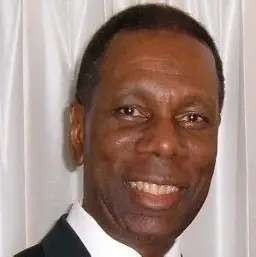
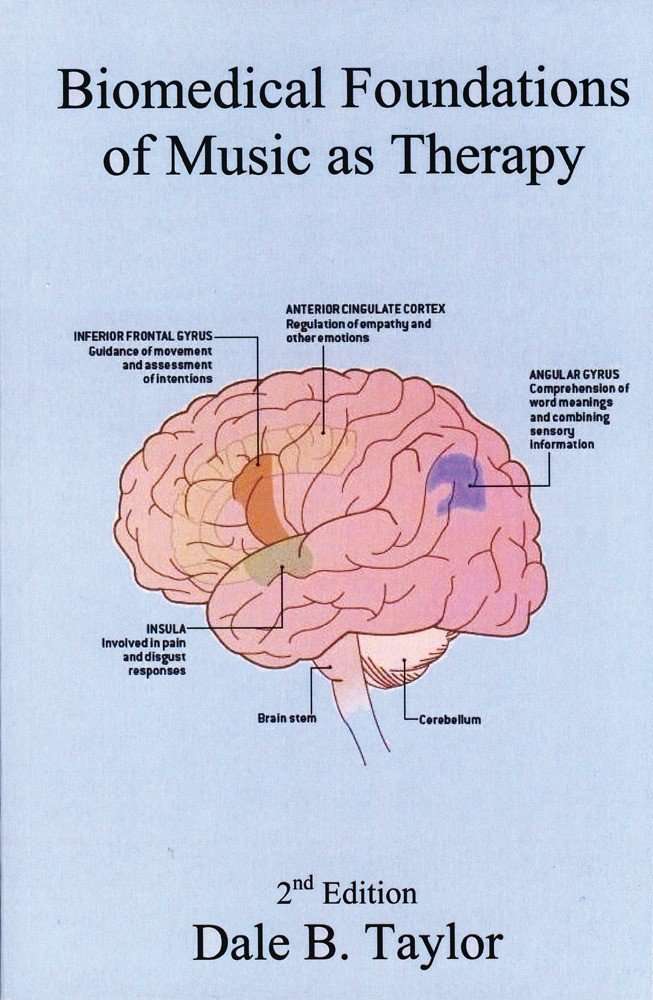
Dr. Dale Taylor, PhD, MT-BC is a music therapist, educator, author, and Professor Emeritus at the University of Wisconsin–Eau Claire. He is known for developing the Biomedical Theory of Music Therapy and writing Biomedical Foundations of Music as Therapy. He founded UW–Eau Claire’s Bachelor of Music Therapy program and served as chair of its Department of Allied Health Professions.

He has also served in public health and aging-related roles, including the Wisconsin Board on Aging and Long Term Care, the Wisconsin Music and Memory Initiative advisory board, and public health planning efforts in Wisconsin

You have spent much of your career showing that music is not just entertainment, but a biological force. What do you most wish the public understood about how music acts on the brain?

I most wish that the public understood that effects of music on the brain are profound and are still being investigated and developed by professional music therapists and neuroscientists. It is imperative that, in order to achieve desirable outcomes without causing harm to client emotional, cognitive and executive capabilities, a certified music therapist using procedures verified through controlled peer reviewed research should be the one administering therapeutic applications of music.

Music therapy interventions and evaluations must not be entrusted to just any volunteer, relative or friend who happens to want to help.

Your work helped advance the idea that music can stimulate changes in neural patterning. How does music therapy help the brain reorganize, recover, or reconnect after injury, trauma, or illness?

My original work in this area involved development and presentation of a theory of how the traumatically injured brain recovers lost functions when musically active but recovers to a much lesser degree when music is not involved. My presentation of this theory at a 1985 international conference in New York City was very well received and included the term “functional plasticity” as my title for the theory.

Although subsequent research that tested the theory did not confirm my hypothesis, it led to discovery of what in Europe was originally called “dendritic connections” while in America the term “plasticity” was retained in describing the cranial process known worldwide today as “Neuroplasticity” or “Neural Plasticity,” terms that did not appear in neuroscience literature prior to the summer of 1985.

Continued research confirms that music activates all parts of the brain thereby stimulating the neuroplasticity process which involves forming new neural connections to replace damaged or lost synaptic circuitry thus allowing the brain to reorganize and recover lost functions.

For people who hear the phrase “music therapy” and think it simply means playing calming music, what is the deeper science behind the practice?

It is understandable that the public reacts in terms of stereotypical images seen through the media in which people who have lost touch with reality are portrayed as screaming, destroying things around them, and endangering others.

In those scenes, the immediate response of caretakers is to do anything to calm them down which usually involves physical restraint, medications, or both.

However, the reality for anyone working with people suffering from illnesses such as clinical depression or psychosis is that most patients are too calm as they are unable to respond effectively to people and environmental stimuli around them in ways that would satisfy their own needs.

Because members of the public experience for themselves the calming effects of music, they react according to what is familiar and assign to music therapy the only “therapeutic” effect that they know which is to calm people down. This also leads to the erroneous belief that anyone who can produce calming music can function as a therapist.

However, the reality of “music therapy” practice involves detailed assessment of the musical and nonmusical capabilities, preferences and limitations of individual clients, formulation of a treatment plan based on knowledge of exactly how a specific kind of musical activity affects the part of the brain that needs to improve its function in order for the client to reach targeted behavioral objectives, and active implementation of that plan while continuing to track progress. Herein resides the importance of knowledge of the scientific basis of music therapy.

One must know that the illnesses and disabilities treated with music therapy are all due to abnormal brain perceptions, processing or production of coping strategies needed to survive and function in the world. In many cases, the goal is to activate, not calm, the person to improve their ability to respond to immediate and real environmental stimuli, make decisions, meet one’s needs, adjust to changes, and interact with others while exhibiting appropriate and effective social skills, physical capabilities, emotional responses, and both verbal and nonverbal communication.

You developed a biomedical approach to music therapy that connects music, brain function, and measurable therapeutic outcomes. How did this theory change the field?

Changes to the field of music therapy were clearly ready and waiting to happen even before I introduced my thoughts and conclusions about the neuroscientific basis of music therapy.

After the first verbal presentation of my biomedical theory of music therapy, word circulated that I was writing a book introducing our field to the neurobiological effects of music in therapy and I began to receive multiple resources from individuals and groups whose research indicated predictable changes in brain activity in response to music.

As people sent me their papers and chapters or handed me their theses and dissertations at conferences, it became clear that many had been searching for ways to determine how these effects contributed to the therapeutic power of music. Also, prior to its writing, I received requests for translated versions of the book from music therapy organizations in other countries.
Version 1.0.0

Since publication of the first edition of Biomedical Foundations of Music as Therapy, numerous practitioners have related to me how their ability to ground their practices in scientifically verifiable data has changed their professional lives. They report affective changes and greater respect from people whom they encounter as potential clients, prospective employers, referring agents, and professional colleagues eager to hear their explanation of how “music therapy” works.

The biomedical understanding of music therapy is now utilized and available throughout the Spanish speaking world of music therapy through translations of the 1997 first edition by the medical and music therapy faculty at the National University of Colombia in Bogota and the 2010 second edition by the Faculty of Medicine of the University of Buenos Aires in Argentina.

New theories and approaches to music therapy have appeared based on the neuroscience of music, numerous practitioners and educators have returned to school to earn doctorates in neuroscience, national and international organizations have appeared focused on music in medicine, academic curricula and credentialing literature have been modified to include the biomedical approach, and new interventions have been developed for the NICU and for neurodiverse clients based on the effects of music on brain functioning.


What happens in the brain when rhythm, melody, harmony, memory, emotion, and movement work together? Why is music such a powerful whole-system experience?

The brain is physically compartmentalized to handle specific tasks in separate neural clusters. For example, sound perception, visual reception and motor behavior each are processed in three separate and distinct areas of the cortex.

While neuroscientists who study music have not as yet determined the specific areas devoted to processing each musical element, it is widely known and accepted that musical experience is processed in many cranial locations at the same time.

This is necessitated by the very nature of music itself, which consists of numerous types of stimuli with multiple characteristics such as those listed in the question, all of which are processed at once.

This multiplicity of simultaneous processing tasks necessitates all parts of the brain working together to understand, perceive, produce, remember and recall musical experiences. Herein lies the powerful advantage of music as a therapeutic intervention:

Because music requires whole brain processing, it does not matter what type of abnormal functioning is exhibited by any specific client due to an ill or injured area of that person’s brain. Therefore, musical interventions can be designed to activate and reorganize how that area functions and to simultaneously coordinate its activity with all other parts of the brain.

Mobilized News focuses on imagination in action. How can music help people imagine new possibilities when they are stuck in fear, pain, depression, isolation, or cognitive decline?

The human brain can become so fixated on thoughts about past issues, losses or ongoing threats to one’s well-being that the person loses the ability to think effectively about how to respond to the needs of everyday life. When a person’s functioning level reaches that stage, clinical interventions often are needed to help the brain refocus on meeting the demands of their current reality at the present time.

Because both passive and active musical participation require all parts of the brain to be actively engaged with the many varied components of music, the person must immediately switch their thinking over to the continuous momentary progressions of musical stimuli.

Once refocused, the music can be manipulated by the therapist to stimulate thoughts of new possibilities, new combinations of phenomena, and creative new ways to resolve or proceed with a series of events. This therapeutic application of music is very nonthreatening since the music can be selected to not include words that could contradict the client’s familiar world view or the therapist may determine ways to allow the client to select words or create musical progressions that suggest new options.

We live in a time of loneliness, stress, disconnection, and information overload. Could music therapy become part of a larger public health strategy, not just a clinical intervention?

Music therapy has often been used to help groups within a community as well as to assist the public at large, especially when there is a need to overcome a public catastrophe such as a weather disaster, act of war, or other human activity resulting in destruction of property and/or multiple loss of life.

In such cases, music therapists use the power of music to help people experience their collective consciousness while reminding them of their societal strengths and traditions.

Songs are chosen which also reveal cultural ideals of a better more prosperous future. Such songs may also raise awareness of strengths, capabilities, loyalties and relationships existing among survivors and may help generate the confidence, motivation and collaboration needed to begin to move forward following a negative event.

In the absence of a tragedy that could have a unifying effect on the public, music therapy can be used to relieve stress among members of the public, to motivate people to pursue action in place of silence, to encourage cooperation rather than competition, and to assume leadership toward the sharing of information and ideas about building a better society for the future.

What have you seen in your work that convinced you music can reach people when words, logic, or conventional treatment cannot?

I have worked with adult men and women suffering from schizophrenia who could not initiate a conversation or follow a directive until given the opportunity to play their musical instrument. They could then express their wishes, cooperate with others, and correctly respond to instructions during the course of the musical experience.

I have used music to totally reverse antisocial behavior patterns of sociopathic adolescents and young adults who, as a result of the intervention, became self-motivated to begin functioning within the boundaries set by society and by authority figures within society. Procedures were designed that helped them understand and accept that such behavior meant inclusion within the social group instead of exclusion and access to their preferred musical medium.

I have worked with people exhibiting severe autism, advanced dementia, and other cognitive disorders who could not independently determine and exhibit appropriate verbal or nonverbal coping strategies to respond to the demands, restrictions and communications existing within their environment.

Using music to help the brain organize and process the environment’s signals, most were able to demonstrate measurable improvement in their coping capabilities.

With clients who had been treated unsuccessfully for eating disorders and suicidal depression, I have used music to bring about major changes in the way their brains cope with stress and process emotional responses to sources of pressure and conflict in their lives.

For individuals (including myself) who have suffered traumatic brain injuries due to accidents or violence, I have seen and experienced the effects of music in assisting in recovery of brain function by stimulating neuroplasticity which is the brain’s own natural repair mechanism.

How should schools, hospitals, elder-care systems, rehabilitation centers, and communities better integrate music therapy into everyday care and human development?

The best way for health care centers to incorporate the benefits of music therapy is to employ the services of a certified professional music therapist as a full member of their medical team. Certain medical complexes, health care companies and school systems each employ dozens of music therapists to cover the many applications of music in rehabilitation and human development.

Other facilities form contractual agreements with private practice music therapy companies who send professional music therapists out to a variety of centers to provide demonstrations, training, consultation, direct interventions and ongoing support for music therapy applications in everyday care.

An essential component of the process is the preliminary work needing to be done to educate health care providers, insurers, administrators, legislators and the public about the proven effects of music on the structure and functions of the human brain which forms the basis for predictable improvements brought about by therapists in the emotional, cognitive, social, physical, and communicative capabilities of individual clients.

Looking ahead, what is the next frontier for music, the brain, and healing — and what would it take for society to treat music as essential infrastructure for human well-being?

The future of music therapy as a profession is both promising and still developing. As music therapy advocates continue to make gains in protecting the public from uncertified claimants, more and more states are passing laws requiring licensure in order to offer services under the “music therapy” rubric. This trend shows increasing public perception of the medical, social and scientifically proven benefits of music therapy applications. A future goal of the music therapy profession should be to infuse into the medical education of certain medical specialties instructional units focused on music therapy applications and their predictable outcomes such as

a) obstetrics and surgery where music has been shown to raise the pain threshold resulting in less need for anesthetic medication,

b) neurorehabilitation where music has been shown to enhance cranial recovery from TBI by stimulating the neuroplasticity process resulting in recovery of physical coordination and speech communication,

c) geriatrics where familiar music has proven to stimulate at least temporary recovery of cognitive functioning in patients suffering from Alzheimer’s and other dementias, and

d) psychiatry where music therapy has a long positive history of acquiring immediate and lasting improvements in emotional expression, cognition, verbal and nonverbal communication, and numerous other functions.

While there are frequent reports of individual physicians who currently insist on using music in the operating room, awareness of these benefits has been acquired after entering medical practice such as during medical residencies upon hearing about it from a coworker or colleague.

Also, many reports reflect use of music preferred by the surgeon with no regard for benefits to be gained through use of music selected from patient preferences. By including music therapy in medical education, physicians will become aware of the large and growing research foundation for the use of music to reach patient medical objectives.

When physicians begin using music throughout the health care arena, public awareness and acceptance will follow as will increased coverage for music therapy services.

Continue Reading

Imagination in Action

Physicist Chiara Marletto: How to know when an imagined future can become a real, testable possibility?

Published

on

“Fantasy ignores constraints; imagination works within them.  A genuinely possible future is one that does not violate the laws of nature and for which we can, at least in principle, explain a path from here to there, that is compatible with the physical laws.” –Chiara Marletto

Chiara Marletto is a Research Fellow at Wolfson College, University of Oxford. Her research interests are at the foundations of physics. Her research has focused on issues in Quantum Information Theory, Condensed-Matter Physics, Quantum Biology and Thermodynamics.

Some of her recent work has utilized a recently proposed generalization of the quantum theory of information – constructor theory – to address issues at the foundations of the theory of control and causation in physics.

These include applications to defining general principles encompassing classical, quantum and post-quantum theories of information; and to assessing the compatibility of essential features of living systems, such as the ability to self-reproduce and evolve, with fundamental laws of physics, in particular with quantum theory.

They also include the definition of a new class of witnesses of non-classicality in systems that need not obey quantum theory, such as gravity; and a scale-independent definition of irreversibility, work and heat, based on constructor-theoretic ideas.


You describe physics through what is possible and impossible. How can this way of thinking help people move from “the world is broken” to a better world is possible”?  

Physics is fundamentally about distinguishing between what is possible and what is not possible according to the laws of nature. Once we understand that many societal problems are not laws of physics but consequences of bad explanations or poor designs, improvement becomes a matter of a lack of knowledge, and knowledge can grow.

When people feel overwhelmed by crisis, what does science teach us about the power of imagination to discover new solutions?

Science teaches us that new possibilities are often invisible until someone discovers the right explanation by exercising their imagination within the scientific method. Human progress has repeatedly depended on imagination disciplined by reason: the ability to conceive of alternatives and then test them against reality. The lesson from science is to learn how to harness imagination to see new problems and solve them as fast as possible.

.What is the difference between fantasy and imagination — and how do we know when an imagined future can become a real, testable possibility?

Fantasy ignores constraints; imagination works within them.  A genuinely possible future is one that does not violate the laws of nature and for which we can, at least in principle, explain a path from here to there, that is compatible with the physical laws.

You’ve written about *The Science of Can and Can’t*. What are some “cant’s” society assumes are permanent — but may actually be design failures waiting to be reimagined?

Many social impossibilities are not fundamental limitations but failures of imagination and institutional design. Poverty, destructive conflict, or environmental degradation are often treated as inevitable when, in fact, they may simply reflect that we have not yet created the necessary knowledge to solve them. We need to think of constructive solutions rather than limiting ourselves to avoiding problems. 

What prevents human beings, institutions, and governments from imagining better systems when the old ones are clearly failing?

We often avoid deep problem-solving because we try to prioritize stability and incremental, safe thinking. Progress requires criticism, experimentation beyond current boundaries, and the possibility that deeply rooted assumptions may be wrong. 

Is genius something rare, or is it a capacity that emerges when people learn how to ask better questions, make better explanations, and challenge inherited assumptions?

Genius is often misunderstood as a mysterious gift possessed by a few extraordinary people. In reality, creativity can emerge in all people when they are free to question assumptions, seek good explanations, and persist through criticism and error, undisturbed by distractions. 

Error is not the opposite of progress; it is the mechanism by which progress occurs. Science advances because mistakes can be identified and corrected, and societies become more resilient when people learn that being wrong is not a humiliation but an opportunity to improve.

Constructor theory asks what transformations are possible. If we applied that to society, what would it mean to transform fear into courage, confusion into clarity, and crisis into capability?

Constructor theory focuses attention on transformations: what can be changed, and what is required to change it. Applied socially, this means asking not whether fear or confusion exist, but what knowledge, institutions, and conditions are needed to transform fear and confusion into courage, understanding, and capability.

How can science help ordinary people become better problem-solvers in daily life — in their communities, families, work, and civic responsibilities?

Science is ultimately a way of thinking about problems rationally and creatively. It teaches us that difficulties are not signs of hopelessness but invitations to seek better explanations and more effective methodologies, and ultimately to find new and better problems to solve.

Continue Reading

Imagination in Action

Where the (new) Jobs are

Published

on

The industrial age is fading. A capability economy is emerging.

The old economy trained people to fit into machines. The new economy needs people who can repair, redesign, connect, care, secure, restore, and regenerate the systems we all depend on.

For more than a century, the “good job” was built around the industrial model: extract resources, manufacture products, move goods, sell more, dispose of waste, repeat. That model created prosperity for many, but it also created brittle supply chains, polluted communities, degraded ecosystems, public health stress, financial instability, and a workforce often separated from the real needs of life.

Now the shift is underway.

The World Economic Forum’s Future of Jobs Report 2025 projects major labor-market disruption by 2030, with 170 million new roles created and 92 million displaced — a net gain of 78 million jobs — driven by technology, demographics, geoeconomic pressure, and the green transition. (World Economic Forum) Clean energy employment is also growing: the International Energy Agency reports that global energy jobs were expected to grow about 3% in 2024, with clean energy remaining a major employment engine. (IEA) The International Labour Organization identifies green jobs, skills, and decent work as central to a just transition, especially as economies move toward low-carbon and circular systems. (International Labour Organization)

The story is not “robots take all jobs.”

The story is: old tasks fade; new capabilities rise.


The big shift: from jobs of extraction to jobs of restoration

Industrial-age work was organized around:

Extraction → Production → Consumption → Waste

The new economy is being organized around:

Care → Repair → Regeneration → Intelligence → Resilience → Coexistence

That means the fastest-growing career pathways are not just in technology. They are in the places where human systems meet living systems: food, energy, water, health, cities, finance, democracy, materials, media, mobility, cybersecurity, and community resilience.

The new jobs are where the pressure points are.

Circularity: From waste workers to resource stewards

The circular economy turns waste into feedstock, repair into enterprise, and materials recovery into infrastructure. The ILO has estimated that a circular economy transition could create millions of jobs through recycling, repair, rental, and remanufacturing, replacing the old “take-make-waste” model.

Emerging careers:

  • Circular systems designer
  • Materials recovery specialist
  • Repair economy entrepreneur
  • Product life-cycle analyst
  • Remanufacturing technician
  • Zero-waste logistics planner
  • Reuse marketplace manager
  • Industrial symbiosis coordinator
  • Sustainable packaging designer
  • Community composting operator
  • Right-to-repair policy advocate
  • Building deconstruction specialist

Why it matters: Every community throws away value. Circularity turns that lost value into local jobs, local businesses, and lower material costs.

Clean and renewable energy: From fossil dependency to energy independence

The clean-energy workforce is expanding across solar, wind, storage, grid modernization, efficiency, electrification, and energy management. The IEA’s energy employment reporting shows the transition is already reshaping where energy work happens and what skills are needed.

Emerging careers:

  • Solar installer
  • Wind turbine technician
  • Battery storage technician
  • Microgrid designer
  • Energy auditor
  • Building electrification specialist
  • Heat pump installer
  • Grid modernization engineer
  • Community solar project developer
  • Energy resilience planner
  • EV charging infrastructure technician
  • Energy data analyst
  • Virtual power plant operator
  • Renewable energy finance specialist

Why it matters: Energy is no longer just a utility bill. It is economic security, national security, climate resilience, and local self-reliance.


Food systems: From industrial food chains to local nourishment networks

The old food economy rewarded scale, distance, chemicals, and shelf life. The new food economy rewards nutrition, soil health, localization, transparency, resilience, and waste reduction.

Emerging careers:

  • Regenerative farmer
  • Urban agriculture coordinator
  • Controlled-environment agriculture technician
  • Food hub manager
  • Community kitchen operator
  • Local procurement coordinator
  • Soil health specialist
  • Compost systems manager
  • Food waste prevention strategist
  • Cellular agriculture technician
  • Precision fermentation specialist
  • Nutrition access coordinator
  • Farm-to-institution logistics manager
  • Food sovereignty organizer

Why it matters: Food is not just a commodity. It is public health, climate strategy, local enterprise, and community security.

Public and planetary health: From sick to health creation-care 

The industrial model treats health mostly after harm occurs. The new model creates health before crisis: clean air, safe water, good food, walkable places, mental well-being, climate resilience, and social connection.

Emerging careers:

  • Community health worker
  • Planetary health analyst
  • Climate-health risk planner
  • Public health communications specialist
  • Preventive care navigator
  • Heat resilience coordinator
  • Air quality monitor
  • Healthy buildings specialist
  • Mental health peer-support specialist
  • Social prescribing coordinator
  • Public health data analyst
  • Community resilience nurse
  • Water safety advocate

Why it matters: The future of health is not only in hospitals. It is in homes, schools, streets, food systems, energy systems, and ecosystems.

ICT, AI, and cybersecurity: From digital tools to trusted public intelligence

Artificial intelligence, cybersecurity, data governance, and digital infrastructure are becoming core public systems. LinkedIn’s recent job trend reporting points to fast growth in AI, engineering, cybersecurity, and related roles, while Accenture has warned that AI is widening the cybersecurity skills gap and increasing demand for people who combine technical skill with strategic judgment.

Emerging careers:

  • AI systems designer
  • AI ethics and governance lead
  • Cybersecurity analyst
  • Critical infrastructure cyber defender
  • Data governance manager
  • Digital public infrastructure specialist
  • Privacy engineer
  • Trust and safety specialist
  • Civic technology designer
  • Open-source intelligence analyst
  • Digital accessibility specialist
  • Community broadband planner
  • AI literacy trainer
  • Human-AI workflow designer
  • Misinformation resilience analyst

Why it matters: Digital systems now shape elections, health care, education, finance, emergency response, media, and public trust. The new digital job is not just coding. It is safeguarding reality.

Personal and digital democracy: From politics as performance to participation as practice

The old civic model asks people to vote, complain, or disengage. The new civic model builds participation into daily life: public problem-solving, transparent decision-making, local assemblies, participatory budgeting, civic data, and community-owned solutions.

Emerging careers:

  • Civic engagement designer
  • Participatory budgeting facilitator
  • Deliberative democracy organizer
  • Public-interest technologist
  • Community assembly coordinator
  • Civic data analyst
  • Public trust strategist
  • Election resilience worker
  • Government transparency advocate
  • Local policy navigator
  • Community mediation facilitator
  • Digital democracy platform manager

Why it matters: Democracy is not only a system of elections. It is a system of shared capability.


Mobility and transportation: From car dependency to access for all

The industrial transportation model centered on private vehicles, highways, oil, and sprawl. The new mobility economy centers on access: walking, biking, transit, EVs, shared mobility, logistics intelligence, safer streets, and cleaner freight.

Emerging careers:

  • Mobility planner
  • EV fleet manager
  • Transit data analyst
  • Bike and micromobility technician
  • Complete streets designer
  • Safe routes coordinator
  • EV charging project manager
  • Mobility-as-a-service operator
  • Freight efficiency analyst
  • Accessible transportation designer
  • Last-mile logistics coordinator
  • Battery recycling technician

Why it matters: Transportation is not just movement. It is time, health, air quality, household cost, economic access, and community design.


Smarter cities and communities: From concrete growth to living infrastructure

The industrial city was built around roads, pipes, zoning, and consumption. The next city is an operating system for resilience: shade, water, energy, housing, food, mobility, data, and public space working together.

Emerging careers:

  • Urban resilience planner
  • Green infrastructure installer
  • Smart-city systems integrator
  • Community solar planner
  • Water reuse specialist
  • Flood mitigation designer
  • Urban forestry technician
  • Heat island reduction coordinator
  • Affordable housing innovation manager
  • Public space activation producer
  • Building performance analyst
  • Civic infrastructure storyteller

Why it matters: The city of the future is not “smart” because it has sensors. It is smart because it keeps people safe, healthy, connected, and capable.


Ethical finance and ecological economics: From speculation to resilience capital

The old financial economy often rewards extraction, short-term returns, and disconnected speculation. The new economy needs capital that strengthens communities, restores ecosystems, and keeps value circulating locally.

Emerging careers:

  • Community wealth builder
  • Cooperative finance specialist
  • Local investment fund manager
  • Climate risk analyst
  • Resilience finance strategist
  • Public banking advocate
  • Regenerative enterprise advisor
  • Impact measurement analyst
  • Ecological economist
  • Community benefits agreement specialist
  • Green bond analyst
  • Mutual aid finance coordinator
  • Local currency systems designer

Why it matters: Money is not neutral. It either drains communities or strengthens them.


Localization: From global fragility to local capability

Global systems are not disappearing, but communities are learning the danger of depending on distant supply chains for everything. Localization creates work by rebuilding local food, energy, repair, media, health, education, and enterprise capacity.

Emerging careers:

  • Local supply-chain coordinator
  • Community enterprise developer
  • Local procurement specialist
  • Main Street revitalization strategist
  • Neighborhood resilience organizer
  • Cooperative business developer
  • Makerspace manager
  • Community logistics planner
  • Local media producer
  • Skills exchange coordinator
  • Mutual aid network organizer
  • Community emergency preparedness trainer

Why it matters: The strongest communities are not isolated. They are connected — but not helpless.


Permaculture and whole-system design: From siloed fixes to living systems

Permaculture is not only about gardening. It is a design discipline for relationships: water, soil, food, buildings, energy, economy, culture, and care.

Emerging careers:

  • Whole-systems designer
  • Permaculture educator
  • Watershed restoration worker
  • Agroecology planner
  • Habitat restoration technician
  • Community garden coordinator
  • Soil carbon specialist
  • Ecological landscape designer
  • Rainwater harvesting installer
  • Rewilding project manager
  • Bioregional planner
  • Nature-based solutions consultant

Why it matters: The future will be designed either by crisis or by care. Whole-system design makes care practical.


Media, imagination, and public intelligence: From attention extraction to shared understanding

The old media economy monetized attention, outrage, and division. The new media economy must build understanding, trust, coordination, and action.

Emerging careers:

  • Solutions journalist
  • Systems storyteller
  • Community media producer
  • Civic livestream host
  • Public knowledge curator
  • Data visualization producer
  • Documentary impact strategist
  • Media literacy educator
  • Local information steward
  • Event-to-action producer
  • Public-interest editor
  • Network convener
  • Solutions guide producer

Why it matters: A well-informed public is not a market segment. It is the foundation of a functioning society.


The jobs that matter most now are bridge jobs

The new economy needs specialists. But it also needs connectors.

The most important roles will often sit between sectors:

  • Energy + housing
  • Food + health
  • Mobility + climate
  • Finance + community ownership
  • AI + public trust
  • Media + civic action
  • Circularity + manufacturing
  • Democracy + digital infrastructure
  • Water + land use
  • Education + workforce transition

These are not just jobs. They are system repair roles.


What skills matter now?

The new economy rewards people who can do five things well:

1. See systems
Understand how food, energy, water, finance, health, media, and governance connect.

2. Work across differences
Bring together public agencies, businesses, communities, technologists, educators, and local leaders.

3. Turn information into action
Move from awareness to preparedness to capability.

4. Use technology wisely
AI, data, sensors, platforms, and automation are tools — not substitutes for judgment.

5. Restore trust
The most valuable workers will help people understand what is real, what is possible, and what to do next.

The bottom line

The future of work is not only about getting a job.

It is about creating livelihoods that help life continue.

The industrial age asked:
How do we produce more?

The new economy asks:
How do we restore what keeps us alive?

That is where the new jobs are: in clean energy, circularity, food systems, care, public health, cybersecurity, digital trust, local enterprise, ecological design, community media, and democratic participation.

The old economy made people serve systems.

The new economy must make systems serve life.

Continue Reading

Imagination in Action

Politics is NOT the Solution

Published

on

Why Politics Is Not the Solution

It Is the Problem.

By Steven Jay
Executive Producer and Co-Founder, MobilizedNews.com

We are told, over and over again, that politics will save us.

Vote harder. Fight harder. Donate more. Pick a side. Defeat the enemy. Win the next election. Control the narrative. Capture the institution. Protect democracy. Restore order.

But what if the system we keep turning to for solutions is itself a major source of the crisis?

What if politics, as currently practiced, is not designed to solve problems, but to manage conflict, protect power, divide the public, and keep peo0ple trapped inside systems that no longer serve life?

That is the uncomfortable truth we must now face.

Politics is not the solution.

Politics is the problem.

Not because civic participation is wrong. Not because democracy is obsolete. Not because government has no role. But because modern politics has become a theater of permanent opposition inside a collapsing operating system.

  • It rewards division over design.
  • Loyalty over truth.
  • Messaging over meaning.
  • Campaigning over governing.
  • Winning over working.

And while the public is pushed into endless outrage, the deeper systems continue to fail.

  • Food systems break.
  • Health systems overwhelm.
  • Housing becomes unaffordable.
  • Media becomes manipulative.
  • Education becomes outdated.
  • Energy remains centralized.
  • Finance extracts from communities.
  • Climate shocks intensify.
  • Loneliness spreads.
  • Trust collapses.

Then politics arrives and says: “Give us power, and we will fix it.”

But the question is no longer who should control the old system.

The question is whether the old system can solve the problems it helped create.

The real crisis is not left versus right

The real crisis is not liberal versus conservative, progressive versus traditional, public versus private.


The real crisis is failed system design.


We are living inside institutions, economic models, media systems, food systems, energy systems, and political systems built for another era.

They were designed for centralization, extraction, command-and-control authority, mass consumption, industrial growth, and public dependency. They were not designed for ecological limits, digital disruption, planetary interdependence, local resilience, public intelligence, or human sovereignty.

That is why so many people feel politically exhausted.

They are not simply tired of bad leaders. They are tired of being forced to choose between competing versions of a system that is not working.

  • Politics asks: Which side are you on?
  • Life asks: What system are we designing?
  • Politics asks: Who should rule?
  • Communities ask: How do we feed people, power homes, care for one another, restore ecosystems, protect truth, and build futures worth living in?

Politics simplifies reality into slogans.

Systems thinking reveals reality as interdependence.

The political trap

The political trap is the belief that social transformation begins with capturing power at the top.

But real transformation usually begins elsewhere.

It begins when systems are designed for Main Street, not Wall Street.

It begins when communities build new food networks, new energy systems, new media platforms, new learning models, new health practices, new cooperative economies, new civic tools, and new ways of making decisions together.

Politics turns citizens into spectators, donors, voters, followers, and combatants.

A living democracy turns people into creators, stewards, neighbors, builders, protectors, and participants.

That is the shift we need now.

  • Not less democracy.
  • More democracy.
  • Not more partisan combat.
  • More public capability.
  • Not blind faith in institutions.
  • A better architecture for human cooperation.

So what is the solution?

The solution is not anti-politics.

The solution is to move beyond politics as performance and toward democracy as a living system.

  • That means building a society where people are not merely asked to vote every few years, but are invited to participate every day in shaping the systems that shape their lives.
  • The solution is a civic operating system based on truth, transparency, ecological intelligence, local resilience, cooperative design, and shared responsibility.

At Mobilized News, we call this a shift from failed system design to systems of service.

It means asking better questions:

  • How do we design food systems that nourish communities instead of poisoning people and land?
  • How do we build energy systems that are clean, decentralized, affordable, and community-owned?
  • How do we create media systems that clarify instead of confuse?
  • How do we build cities that serve people instead of traffic, speculation, and surveillance?
  • How do we develop technology that strengthens human dignity instead of manipulating attention?
  • How do we transform finance from extraction into regeneration?
  • How do we move from institutional dependence to community capability?
  • How do we make democracy personal, practical, local, digital, and daily?

These are not political questions in the old sense.

  • They are design questions.
  • They are survival questions.
  • They are civilization questions.

The future will not be built by politicians alone.


The future will be built by people who understand that every sector is connected.

  • Energy is connected to housing.
  • Housing is connected to health.
  • Health is connected to food.
  • Food is connected to soil.
  • Soil is connected to water.
  • Water is connected to climate.
  • Climate is connected to migration.
  • Migration is connected to economics.
  • Economics is connected to governance.
  • Governance is connected to trust.
  • Trust is connected to media.
  • Media is connected to imagination.

When these systems are treated separately, society breaks down.

When they are understood together, solutions become possible.

That is why the future belongs not to political parties, but to networks of people, communities, innovators, journalists, educators, artists, scientists, entrepreneurs, public servants, and everyday citizens who are willing to connect the dots and build what comes next.

The old story says power comes from control.

The new story says power comes from connection.


We do not need another argument. We need a new architecture.


We do not need more noise.

We need signal.

We do not need more manipulation.

We need clarity.

We do not need more leaders telling us they alone can fix it.

We need systems that allow people everywhere to participate in the repair, redesign, and renewal of society.

That is the purpose of Mobilized News.

  • To help people see the whole system.
  • To separate facts from fiction.
  • To reveal where pressure is building.
  • To identify where solutions are emerging.
  • To connect those solutions across communities, sectors, and regions.
  • To move from awareness to action.
  • To help people become the media, not just consume it.

Because a well-informed public is not a political slogan.

It is the foundation of freedom.

The choice before us

We can continue to fight inside systems that are failing.

Or we can build systems that help life flourish.

We can continue mistaking political victory for social transformation.

Or we can organize around food, energy, health, housing, media, education, technology, finance, and governance as one interdependent web of life.

We can continue asking broken institutions to save us.

Or we can become the architects of a better civilization.

Politics, as we know it, divides the world into winners and losers.

Life does not work that way.

Nature does not work that way.

Healthy communities do not work that way.


The future will not be created by one party defeating another.

It will be created by people everywhere learning how to cooperate without compromise, tell the truth without fear, and design systems that serve all life.


That is the real work now.

Not politics as usual.

Not outrage as identity.

Not elections as salvation.

But imagination in action.

Systems in service.

People in power.

A world that works for all.

We invite you to take a front row seat to the changes you wish to create in the world.  Sign up here.

Continue Reading

Subscribe


Translator

Featured Upcoming Events