
Connect with us

ENERGY

Researchers use 3D visualization to predict, prevent hurricane damage

Published

on

Researchers use 3D visualization to predict, prevent hurricane damage

Galveston Island was used as an example to predict damage that would occur as a result of hurricanes of varying intensities.

Peer-Reviewed Publication

TEXAS A&M UNIVERSITY

Hurricane Ike Damage
IMAGE: DAMAGE ON GALVESTON ISLAND IN THE WAKE OF HURRICANE IKE.

view more 

CREDIT: TEXAS A&M UNIVERSITY AT GALVESTON

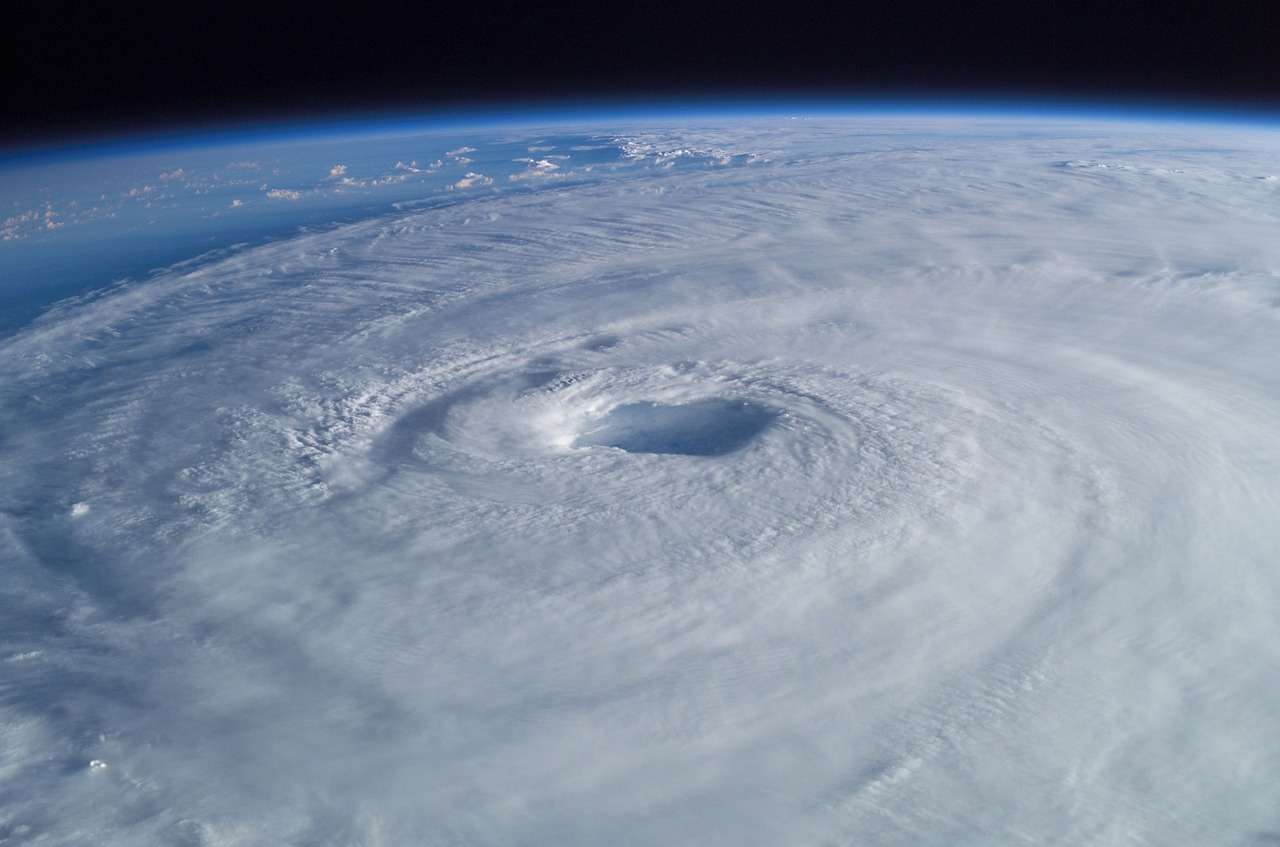
Beginning annually on June 1, hurricane season poses a major threat to Texas coastal communities, causing both physical and financial damage to the areas they hit. This damage can be staggering; when Hurricane Harvey hit in 2017, it cost Galveston $132.73 billion in damages. Texas A&M University researchers have collaborated to understand the impacts of storm surge floods before they occur to potentially reduce the level of damage. Their study was published in “Urban Informatics.”

The researchers have implemented 3D visualization technology to identify the potential outcomes of hurricane flooding before it occurs. According to researchers, severe weather has been increasing over the last several years due to global climate change. If severe storms and flooding continue to increase in the future, implementing 3D visualization based on real-time weather forecasts could result in improved safety and less damage-inflicted costs.

The 3D modeling technique also allows researchers to examine the effects of damage-preventing infrastructure, such as the proposed Galveston “Ike Dike,” a dike designed to shield Galveston Island from future storm surge and flood events.

Using Galveston Island as an example, researchers used 3D visualization to model the damage that would occur to residential buildings as a result of hurricanes of varying intensities. They also modeled damage with preventative infrastructure — the “Ike Dike” — in place.

An advantage of 3D visualization over other damage modeling methods is that it allows researchers to model specific buildings, accounting for basements, back entrances, and windows. By identifying a residential building’s first-floor elevation level, researchers can predict the physical and financial damage that a hurricane will cause to the specific building.

“3D visualization of hurricanes and storm surges allows us to understand how flooding will impact our coastal communities by allowing us to vividly see how each building and road might be impacted by a given flood,” said Dr. Xinyue Ye, the Harold Adams Endowed Professor of Landscape Architecture and Urban Planning and affiliated faculty member in the Department of Computer Science and Engineering, the Department of Multidisciplinary Engineering, the Department of Geography, and the Section of Visual Computing & Interactive Media.

Faculty collaborators on the project include Dr. David Retchless, associate professor in the Department of Marine and Coastal Environmental Science at Texas A&M University at Galveston, Dr. Galen Newman, professor and head of the Department of Landscape Architecture and Urban Planning and the Nicole and Kevin Youngblood Professor of Residential Land Development at Texas A&M, and Dr. Nick Duffield, the Royce E. Wisenbaker Professor I in the Department of Electrical and Computer Engineering and director of the Texas A&M Institute of Data Science.

Critical Information For Homeowners

Since 3D visualization highlights the potential damages hurricane flooding may cause, it can give homeowners a better understanding of what to invest in as far as insurance and preventative infrastructure. This technology also creates an increased community awareness around potential outcomes of hurricanes and flooding.

“Having used Galveston as an example, the next step would be to expand that to other coastal communities in Texas,” Ye noted. “In this study, we mainly used residential houses, but we can expand it to other business properties as well.”

Effective use of 3D models can protect Texas residents. By implementing this technology on other coastal communities or community buildings, such as schools and stores, researchers can help residents and officials create a plan for hurricane season. As real-time weather forecasts are implemented into the models, researchers may be able to determine when evacuation is necessary and use this data to alert residents.

“3D visualization serves as a universal language, bridging diverse disciplines and fostering communication between academia and the general public,” said Ye, who also serves as the director of the Texas A&M Center for Geospatial Sciences, Applications, and Technology and the founding director of Urban AI Lab at the Texas A&M Institute of Data Science.

Duffield adds that this project shows how the work at the intersection between geospatial data science and visualization can raise awareness for individuals, communities and government on the consequences of extreme weather and make informed planning decisions for responses.

This study combines the expertise of researchers in multiple fields, including computer engineering, landscape architecture, urban planning, geography, and marine and coastal environmental science. The positive impacts of this research highlight the importance of collaboration between computational science and domain-specific disciplines.

By Alyssa Schaechinger, Texas A&M University Engineering

Continue Reading

ENERGY

James Hansen on Where We’re at Now

Published

on

Continue Reading

ENERGY

Power to the People (Energy Systems)

Published

on


Power, People, and the Price of Extraction

Why it matters:

For centuries, extractive energy systems (coal, oil, gas) fueled empires—driving colonization, enslavement, land theft, and resource wars. The logic was simple: control energy → control people → control territory.

The opportunity:

Community-owned, regenerative energy flips the script—putting power (literally) back in the hands of the people and aligning prosperity with planetary health.


The Big Picture

  • Energy = empire: Fossil economies required conquest, coerced labor, and compliant states to secure fuel and routes.
  • Extraction economics: Profits privatized; pollution, poverty, and political instability socialized.
  • Control loops: Whoever owns generation + grids shapes prices, policies, and public possibilities.

Bottom line: The crisis isn’t only carbon—it’s concentrated power.


How We Got Here (fast history)

  • Colonial fuel cycles: Plantations, mines, and ports were built to move energy and goods outward—wealth flowed up; harms stayed local.
  • Infrastructure as domination: Pipelines, rail, and shipping corridors doubled as tools of territorial control.
  • Petro-politics: Resource dependency locked nations into coups, debt, and wars—from oil fields to shipping straits.
  • Communities extracted twice: First their labor/land, then their future via pollution and underinvestment.

The Damage (we live it daily)

  • People: Displacement, exploitation, redlined neighborhoods, toxic exposure.
  • Planet: Warming, water stress, degraded soils, biodiversity loss.
  • Politics: Corruption, captured regulators, violence around “strategic” zones.
  • Possibility: Local ingenuity smothered by monopoly utilities and distant investors.

 The Shift: Regenerative, Community-Owned Energy

Core idea: Move from centralized, extractive systems to distributed, democratic ones—renewables owned and governed by the communities they power.

What it looks like

  • Energy co-ops & public power: Residents own generation; revenues stay local.
  • Microgrids + storage: Solar, wind, batteries keep hospitals, schools, and homes running—grid or no grid.
  • Agro-voltaics & rooftops: Food + energy on the same land; rooftops become cash-flowing assets.
  • Transparent pricing: Cost-reflective rates; profits reinvested in resilience, not dividends.

Why it works

  • Physics: Sun + wind are everywhere; electrons don’t need empires.
  • Risk: Local ownership reduces geopolitical shocks and price spikes.
  • Justice: Benefits flow to frontline communities first, not last.

What Changes When Communities Own Power

  • Bills → dividends: Families become stakeholders, not just ratepayers.
  • Jobs here, not there: Installation, maintenance, retrofits, and energy services are local work.
  • Health gains: Less soot, fewer asthma attacks, safer streets (LED + mobility).
  • Civic muscle: Co-ops teach governance, transparency, and shared decision-making.

The Playbook (do this next)

  1. Map demand + roofs + land: Identify schools, clinics, and co-op housing as anchor loads.
  2. Form an energy co-op: One member = one vote; publish bylaws and conflict rules.
  3. Lock fair finance: Public banks, green bonds, CDFIs; cap returns, prioritize affordability.
  4. Build microgrids: Solar + storage first; add wind, geothermal, demand response as you scale.
  5. Secure interconnection: Negotiate tariffs; push for right-to-connect and community net metering.
  6. Share the surplus: Reinvest in weatherization, heat pumps, EV carpools, and resilience hubs.
  7. Measure what matters: Energy burden down, outages down, local jobs up, emissions down.

Yes, but…

  • “Isn’t it expensive?” Up-front, yes. Over life-cycle, cheaper and safer than fossil volatility.
  • “What about reliability?” Microgrids + storage outperform during storms and wildfires.
  • “Will it scale?” It already does—distributed systems scale by replication, not just size.

Signals to Watch

  • Cities adopting community choice energy and public power.
  • Co-ops publishing dividends + outage data.
  • Schools + clinics running on solar + batteries as resilience anchors.
  • Utility rules changing to permit microgrids, peer-to-peer trade, and fair interconnection.

The Bottom Line

Destructive energy systems were never just about fuel—they were about dominion.
Community-owned regenerative energy is how we decolonize power, stabilize the climate, and unlock human potential.

Power with people → Power for people → Power by people.
That’s the future worth building.


Call to Action

  • Communities: Form an energy co-op; start with your school, clinic, or housing complex.
  • Mayors + councils: Adopt community choice, microgrid ordinances, and right-to-connect.
  • Funders: Back ownership, not just megawatts—finance dividends for households.
  • Media (us): Track the wins, publish the playbooks, amplify the replicable models.

Mobilized News will keep mapping where communities flip the switch—and how you can copy what works.

Continue Reading

ENERGY

Renewable Energy: Expanding—and much more needed

Published

on

The Report: Delivering the UAE Consensus: Tripling renewable power and doubling energy efficiency by 2030

Continue Reading