
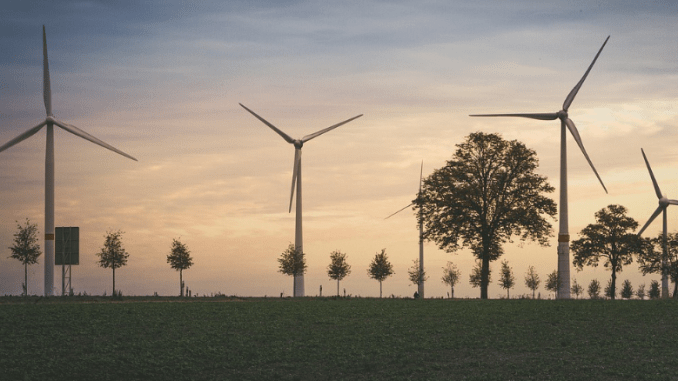
Now the World Must Upgrade the Systems Around It.
Solar and wind are transforming global electricity generation—but grids, financing and access must advance just as quickly.
According to IRENA, the International Renewable Energy Agency, the global transition to renewable electricity has reached a new milestone.
Renewable power generation increased by 9.8% in 2024, its fastest annual growth rate on record, according to new statistics from the International Renewable Energy Agency.
Renewable sources generated 9,836 terawatt-hours of electricity, representing 31.7% of global electricity production. Electricity from non-renewable sources grew by only 1.4%.
The direction of travel is increasingly clear: renewable energy is no longer a secondary addition to the electricity system. It is becoming one of its primary foundations.
The Core Signal
Renewable electricity is expanding much faster than fossil-fuel generation—but not yet quickly, evenly or inclusively enough to meet the world’s electrification goals.
IRENA estimates that renewables would need to supply approximately 78% of global electricity by 2035 to support Türkiye’s incoming COP31 Presidency target of electrifying 35% of final global energy demand.
That means renewable generation must grow to approximately 2.5 times its current level within the next decade.
The technologies largely exist. The economics are increasingly favorable. The larger challenge is upgrading the interconnected systems that determine how electricity is financed, generated, stored, transmitted, distributed and governed.
What Changed?
Renewable generation rose across nearly every world region in 2024:
- Asia: 4,589 TWh, up 14.3%
- Europe: 1,758 TWh, up 7.2%
- North America: 1,535 TWh, up 5.8%
- South America: 1,047 TWh, up 2.9%
- Eurasia: 411 TWh, up 11.9%
- Africa: 227 TWh, up 5.7%
- Oceania: 138 TWh, up 3.4%
- Middle East: 76 TWh, up 17.3%
- Central America and the Caribbean: 55 TWh, up 5.8%
Asia produced almost half of the world’s renewable electricity, led by strong growth in solar and wind. The Middle East recorded the fastest percentage increase, although it began from a much smaller generation base.
Solar and wind continued to dominate new renewable growth, while hydropower remained an important source of electricity in Europe, Asia and the Americas.
Capacity Is Expanding, Too
The growth is not limited to electricity already being generated.
The world added a record 693 gigawatts of renewable capacity in 2025, bringing total installed renewable capacity to approximately 5.2 terawatts.
Renewables represented 49.5% of global electricity-generating capacity at the end of 2025 and accounted for 85.7% of all new capacity added during the year.
That share was lower than the 92.7% recorded in 2024, but renewable deployment continued to significantly outpace new non-renewable capacity.
Why It Matters
Electricity connects nearly every system society depends upon.
As transportation, heating, manufacturing, communications and public services become increasingly electrified, the source and reliability of that electricity will influence:
- Household energy costs
- Industrial competitiveness
- Transportation systems
- Food production and refrigeration
- Water treatment and distribution
- Healthcare and emergency services
- Digital infrastructure and data centers
- National energy security
- Community resilience
Clean electricity can reduce exposure to volatile fossil-fuel markets while strengthening local and regional energy independence.
But generation alone does not create a resilient energy system.
Without sufficient transmission, storage, grid flexibility and community access, renewable projects may be delayed, curtailed or concentrated in places where they deliver fewer public benefits.
The Pressure Point
The renewable transition is moving forward, but its benefits remain unevenly distributed.
Many countries with strong solar, wind and geothermal resources continue to face limited access to affordable financing, modern grids, technical expertise and energy-storage infrastructure.
This creates a growing divide between places able to deploy clean energy rapidly and those burdened by high borrowing costs, aging infrastructure or limited institutional capacity.
UN climate chief Simon Stiell said the transition is advancing because renewable power is increasingly cheaper, safer and faster to deploy. But he warned that progress remains neither fast enough nor inclusive enough, particularly for vulnerable nations requiring greater access to climate finance.
The System Behind the Signal
The energy transition is not simply a technology replacement.
It is a whole-system redesign involving:
Generation → Storage → Transmission → Distribution → Buildings → Transportation → Industry → Finance → Governance
Adding more solar panels and wind turbines without upgrading the systems around them can create bottlenecks.
The next stage of the transition must therefore connect renewable generation with:
- Modernized and interconnected electricity grids
- Long- and short-duration energy storage
- Flexible demand-management systems
- Efficient buildings and industrial processes
- Electric public transportation
- Community-owned and cooperative energy models
- Faster permitting without weakening public participation
- Affordable capital for developing economies
- Workforce training and local manufacturing
What Is Working
The strongest progress is occurring where renewable deployment is treated as part of a broader economic and infrastructure strategy.
Regions are advancing more rapidly when they combine renewable generation with grid investment, public policy, long-term procurement, storage and electrification.
Community energy systems are also demonstrating how renewable power can produce more than electricity. Local ownership can help communities retain revenue, create jobs, reduce energy poverty and strengthen resilience during emergencies.
What Must Happen Next
To reach the proposed 2035 electrification target, governments and institutions must move beyond isolated projects.
They must build systems capable of delivering clean electricity where and when it is needed.
Priority actions include:
- Accelerating transmission and distribution upgrades
- Expanding energy storage and grid flexibility
- Redirecting finance from fossil-fuel expansion toward clean infrastructure
- Improving affordable financing for emerging and developing economies
- Supporting community and cooperative energy ownership
- Electrifying transportation, buildings and industrial processes
- Strengthening regional energy cooperation
- Ensuring workers and communities benefit from the transition
The renewable energy transition is no longer primarily a question of whether the technology works. It is a question of whether institutions, infrastructure and investment can adapt quickly enough.
Record growth demonstrates what is possible.
The next challenge is to transform expanding renewable capacity into affordable, dependable and locally beneficial energy systems.
That requires more than generating additional electricity. It requires redesigning how energy is owned, financed, distributed and connected to the other systems people rely upon.
From Global Progress to Local Capability
Communities do not need to wait for the entire global energy system to change.
They can begin by identifying public buildings suitable for solar installations, developing community energy cooperatives, improving building efficiency, mapping local energy needs and creating resilience hubs supported by renewable power and battery storage.
Businesses and institutions can establish long-term clean-energy purchasing agreements, electrify vehicle fleets, reduce demand during peak periods and invest in local energy projects.
Local governments can streamline responsible permitting, modernize building codes, aggregate electricity purchasing and ensure that low-income neighborhoods participate in—and benefit from—the transition.
Renewable generation is growing faster than ever.
The opportunity now is to ensure that the systems surrounding it grow smarter, fairer and more resilient at the same time.
Signal → System → Risk → Solution → Capability
Signal: Renewable electricity generation recorded its fastest growth to date.
System: Energy is connected to transportation, buildings, food, water, health, finance and digital infrastructure.
Risk: Grid constraints, unequal financing and limited access could slow progress and deepen regional inequality.
Solution: Integrate renewable generation with storage, modern grids, electrification and inclusive ownership.
Capability: Give communities, institutions and governments the tools to produce, manage and benefit from clean electricity where they are now.
Source: International Renewable Energy Agency, Renewable Energy Statistics 2026.