
Connect with us

Circularity

Highlights of the Permaculture Design Process

Published

on

Permaculture Design, also known as Regenerative Design or Ecological Design, encompasses a range of interconnected practices and principles that harmonize with nature’s wisdom. By observing and imitating natural ecosystems, permaculture design strives to create resilient and productive systems that benefit both people and the planet. This blog post will explore some key aspects of permaculture design and how they interrelate.

1. The Ethics and Principles of Permaculture Design:
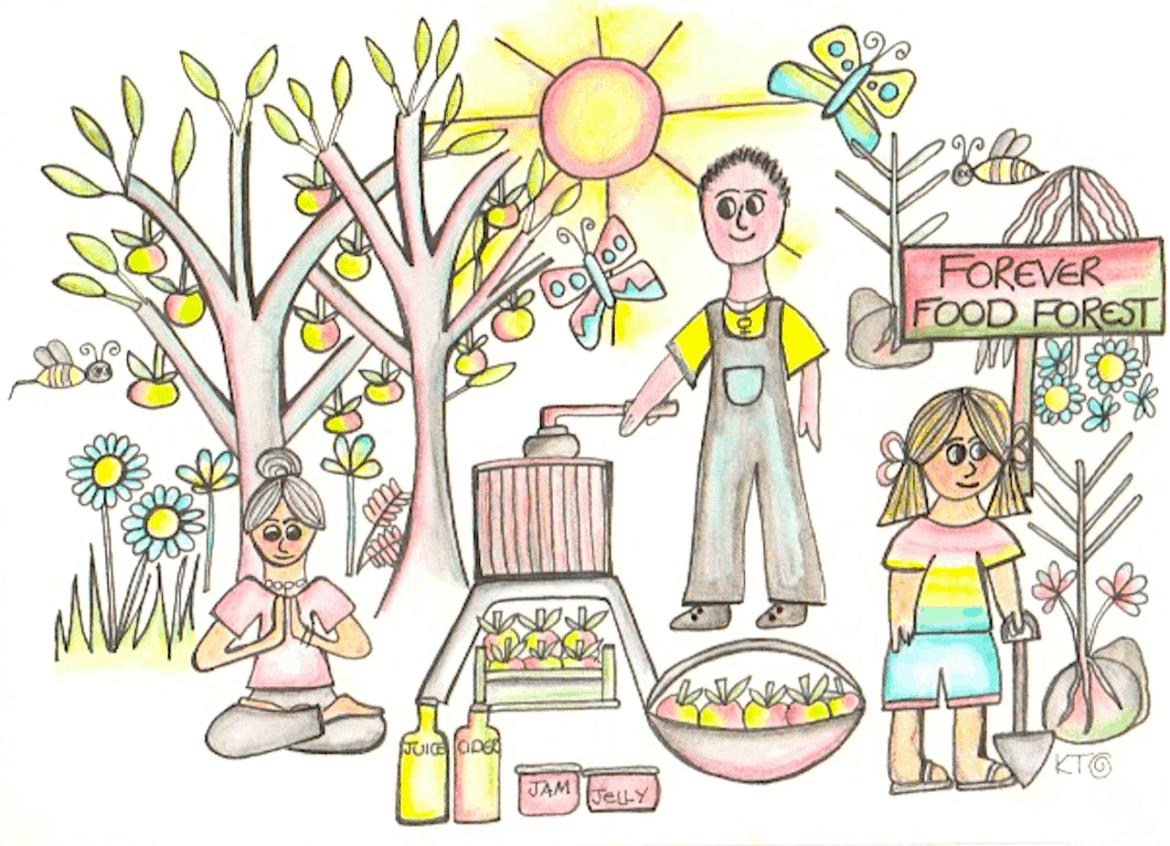
ethics and principles permaculture design

The Ethics of Permaculture Design: Earth Care, People Care, and Future Care (or Share the Surplus) promote a life-affirming system and create a sense of reverence for all life on the planet. By embodying and living these principles, we ensure our species’ continued survival and the planet’s health and maintain a healthy respect for life itself.

The Permaculture Principles:

If you’re a designer or simply a person designing their own farm, homestead, business, or local economy, you can use the Permaculture Principles to help you design integrated systems that use less energy, eliminate “waste”, and create natural abundance.  Here is a peek at some of the Permaculture Principles:

OBTAIN A YIELD

You can’t work on an empty stomach (and neither can anyone else).

REDUNDANCY

Have a backup plan. Be prepared!

CATCH AND STORE ENERGY

Make hay while the sun shines.

MULTIPLE FUNCTIONS

Stacking functions. Wearing more than one hat.

PRODUCE NO WASTE – RETHINK, REDUCE, REPAIR, REUSE, RECYCLE, REPURPOSE

Waste not, want not.

A stitch in time saves nine.

OBSERVE AND REPLICATE NATURAL PATTERNS

USE AND VALUE RENEWABLE RESOURCES AND SERVICES

Let Nature take its course.

DESIGN FROM PATTERNS TO DETAILS

Can’t see the forest for the trees.

SECTOR AND ZONE PLANNING

RELATIVE LOCATION

It’s the connections that matter.

USE EDGES AND VALUE THE MARGINAL

The edge is where the action is.

Don’t think you are on the right track just because it’s a well-beaten path.

USE AND VALUE DIVERSITY

Don’t put all your eggs in one basket.

INTEGRATE RATHER THAN SEGREGATE

Many hands make light work.

APPLY SELF-REGULATION AND ACCEPT FEEDBACK

The sins of the fathers are visited on the children unto the seventh generation.

Make lots of small mistakes.

USE SMALL AND SLOW SOLUTIONS

The bigger they are, the harder they fall.

Slow and steady wins the race.

For further study:

Recommended blog:
Permaculture Principles
Deep Green Permaculture

Recommended video:

00:00

2. Design and Site Analysis:

Site analysis and design in permaculture involve thoroughly assessing the characteristics of a location, such as topography, soil composition, water sources, and microclimates, to inform the strategic placement of elements and maximize the efficient use of resources for creating sustainable and regenerative systems.

For further study,

Recommended blog:
Regenerative Design

Recommended video:

00:00
00:00

00:00

00:00

2.a. What is a Permaculture Sector Analysis?
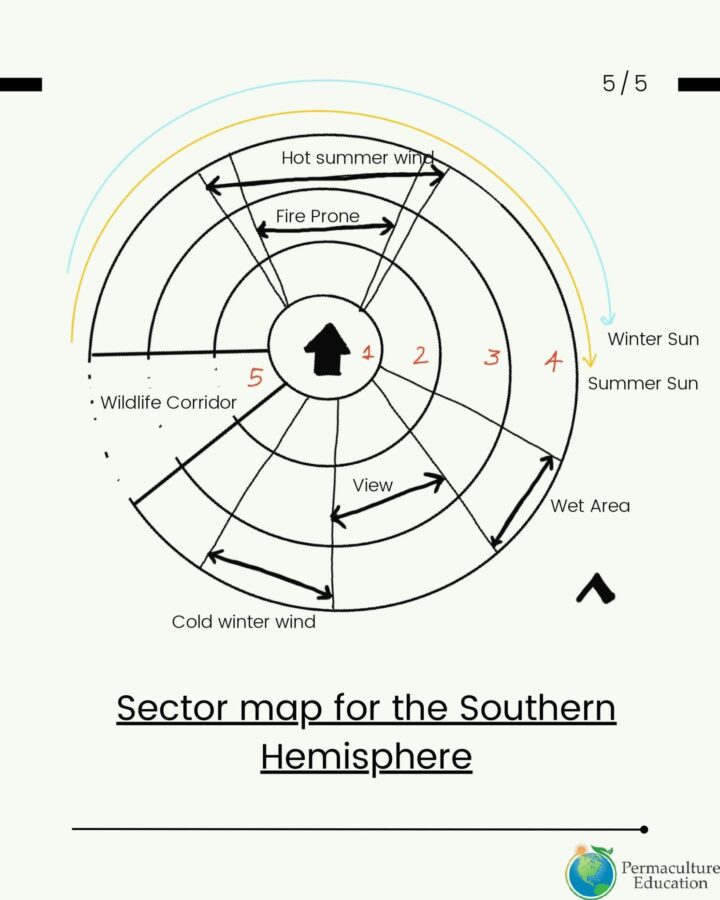
sector analysis

In a Permaculture Sector Analysis, the term sector refers to any natural energy or uncontrolled influence that moves through your design site. And through sector analysis, you can anticipate and enact design decisions that will mediate, mitigate, and improve how those energies and influences affect your site.

For further study,

Recommended blog:
Barbolian Permaculture Journey

3. Companion Planting and Polycultures:

Companion planting is simply planting at least one plant as a ‘companion’ to another. The central idea in companion planting is that monocultures are a bad thing. A monoculture is a plantation of just one crop (as you would typically often see in large farm fields).

The problem with monocultures is that they are inherently unnatural. They take more resources (water, energy, etc.) to maintain and can damage the soil ecosystem. And since they are more prone to problems with pests and diseases, they are harder (if not impossible) to manage organically.

By carefully choosing which plants to place next to each other, we can find solutions to many of the problems that are commonly found in mono-crop systems. We know surprisingly little about the many different ways that different plants interact. But we do know that plants can help each other in a range of surprising ways.

For further study,

Recommended blog:
RootedRevival.com

4. Soil Building and Regenerative Agriculture:

Maintaining soil health is critical for regenerative agriculture and ecosystem health. Soil degradation, which can result from activities such as overuse of pesticides and fertilizers, erosion, and deforestation, can lead to decreased soil fertility, reduced crop yields, and degraded water quality. Soil conservation practices such as cover cropping, crop rotation, and reduced tillage can help to maintain and improve soil health.
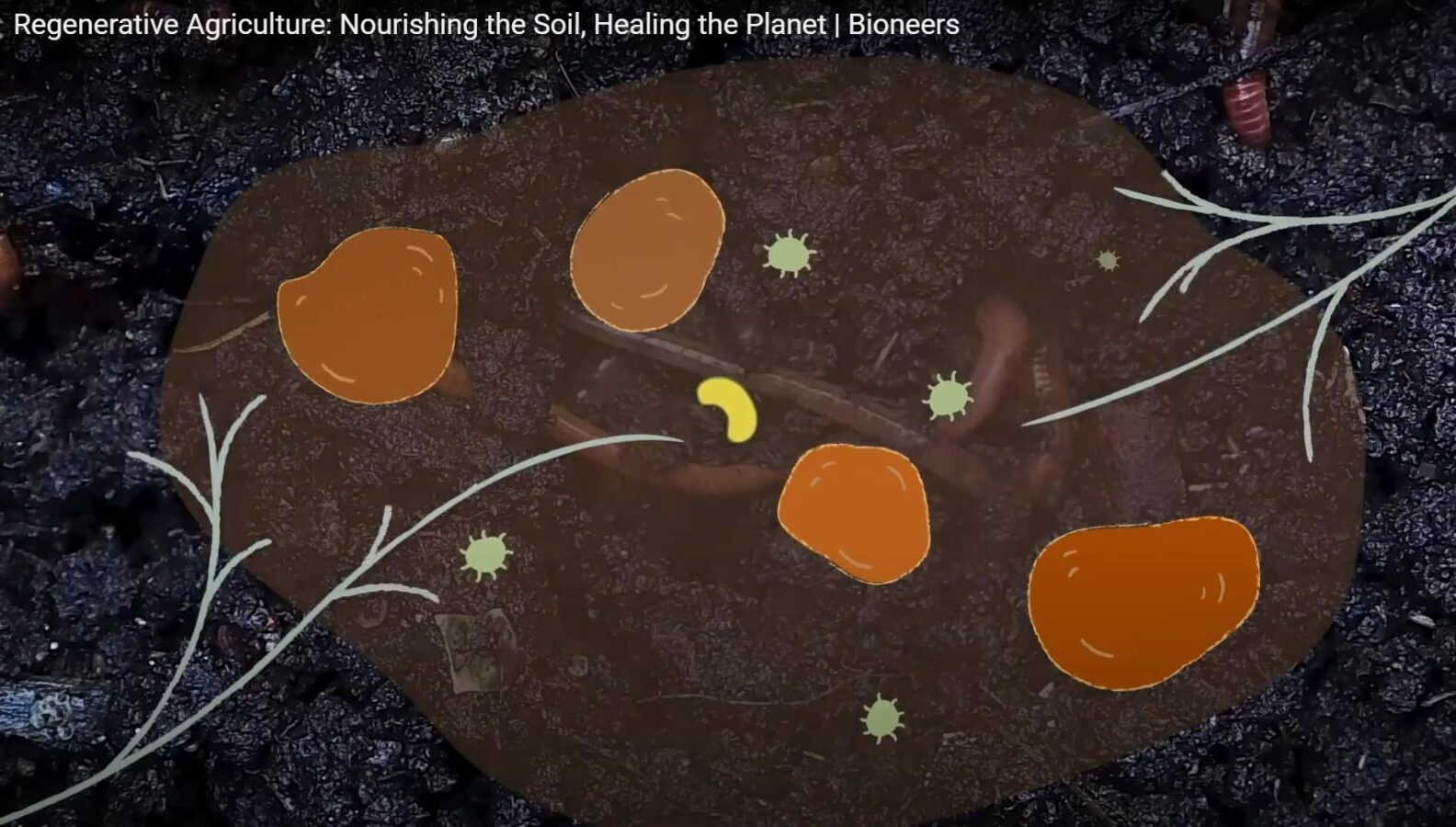
soil building and regeneration

For further study,

Recommended blog: https://www.nrdc.org/stories/regenerative-agriculture-101#what-is

Recommended videos:

00:00

00:00

5. Water Management and Conservation:

Permaculture has numerous aspects; however, its way of dealing with water is a standout among the most energizing and sustaining. Permaculture Designers learn how to design water elements that go beyond the protection of water to energize growing systems and sustain groundwater supplies.

In some ways, Permaculture Design has a “post-present day” sensibility in that it acquires from indigenous methods while additionally drawing from the most modern comprehension and information from a range of applied sciences.

For further study,

Recommended blog: https://www.treehugger.com/permaculture-water-features-inspiration-and-ideas-5189614

Recommended video:

00:00

00:00

6. Perennial Plants and Food Forests:

A Food Forest is an assembly of edible plants and useful species that mimics the relationships in natural, mature forests. If you can imagine the vertical layers of a forest, with tall trees, small trees, shrubs, vines, herbs, ground covers, and fungi, you can create a food forest of your own. Although the term “food forest” conjures visions of a wild area magically producing all the fruits, nuts, herbs, and veggies you could possibly need, it is not magical. It requires a lot of planning and work to set it up. It does not occur naturally but mimics the beneficial relationships found in nature. You will manage diverse and productive ecosystems once you design your food forest.

Learn the why and the how of Food Forests right here.
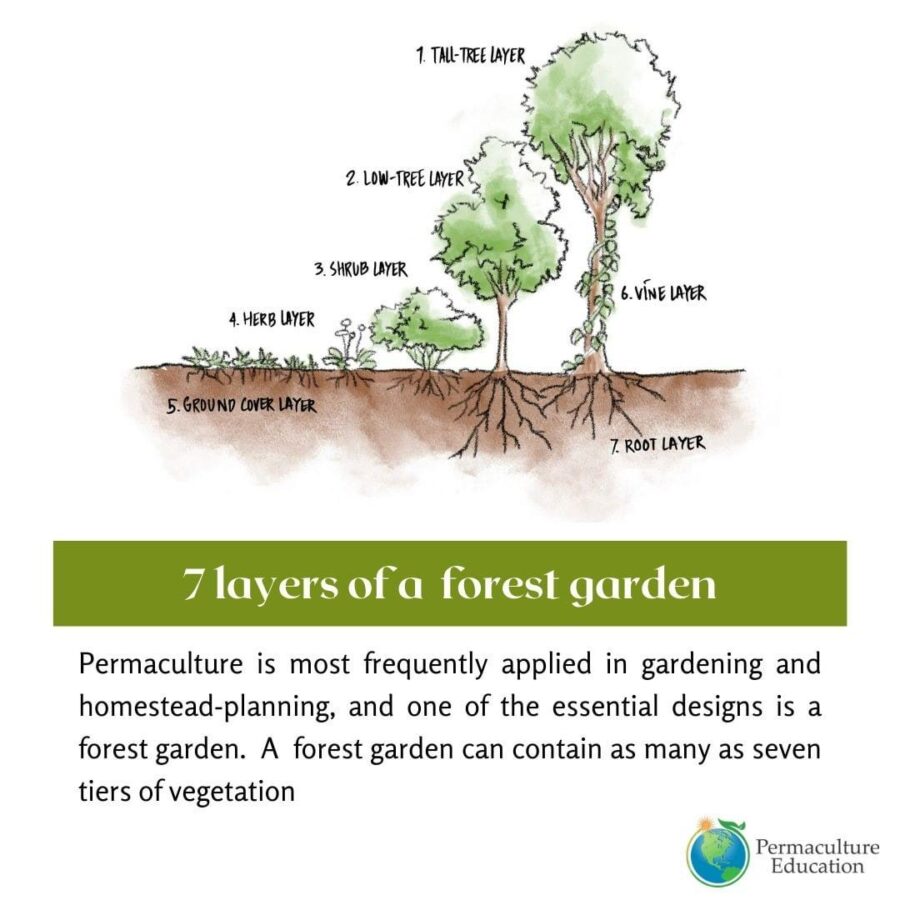
food forest

For further study,

Recommended video:

00:00

If you’d like to read more about Permaculture Design and the topics discussed, please see these resources: https://permacultureeducation.org/video-resources/

Permaculture is a lifelong journey of learning and implementation, so let these insights inspire you to take practical steps toward creating regenerative systems and embracing a harmonious relationship with nature.

Growing with nature is a wonderful approach to a permaculture lifestyle and we hope we can inspire you to do so! If you want to learn more about Permaculture Design and how to offer your services more regeneratively, become a certified Permaculture Designer with us!

Continue Reading

Circularity

Improved Financial Systems (Ecological Economics)

Published

on

Infinite Growth, Finite Planet — Why the Math Won’t Pencil

Why it matters: An economy optimized for extraction, exploitation, and colonization treats living systems like fuel. That logic pushes us toward ecological collapse—and social breakdown with it.

The signal: If the goal is endless growth, the outcome is overshoot. If the goal is thriving within limits, the outcome can be shared prosperity.

  • See the Playbook
  • The Reset
  • Build the Media Commons

✦ ✦ ✦

The Big Picture

  • Design flaw: Externalized costs (pollution, illness, biodiversity loss) + privatized gains.
  • Time lag: Markets price damage after it occurs; ecosystems hit irreversible thresholds.
  • Power loop: Wealth concentrates → policy follows money → extraction accelerates.
  • Bottom line: We don’t just have a climate problem; we have a design problem.

✦ ✦ ✦

How We Got Here

  • Colonial blueprint: Land, labor, and resources treated as controllable “inputs.”
  • GDP as god: What we count (stuff produced) outweighs what we need (health, stability, meaning).
  • Cheap energy era: Fossil subsidies hid true costs, turning waste into “growth.”

✦ ✦ ✦

Reality Check

  • Nature’s limits are non-negotiable.
  • Status-quo “green growth” isn’t enough if materials, land, and energy stay linear and extractive.
  • Justice matters: those least responsible suffer first and worst.

✦ ✦ ✦

The Reset:

  • Ecological Economics + Ethical Leadership + Permaculture + Holistic Design
  • Ecological economics
  • Goal shift: from more to enough (well-being per unit of energy/material).
  • Tools: doughnut/safe-and-just space, Genuine Progress Indicator, caps + commons.
  • Ethical leadership
  • Fiduciary duty → stewardship duty.
  • Incentives for long-term outcomes, not quarterly optics.
  • Radical transparency on supply chains, lobbying, and impacts.
  • Permaculture
  • Design from patterns to details; stack functions; close loops.
  • Soil, water, biodiversity as capital bases, not afterthoughts.
  • Local resilience reduces global fragility.

Holistic system design

  • Think whole lifecycle (materials → use → recovery).
  • Price the true cost (health, climate, biodiversity).
  • Build feedback loops: measure → learn → adapt.

✦ ✦ ✦

What Works (when it’s real)

  • Circular flows: repair, reuse, remanufacture; materials as assets, not trash.
  • Distributed energy + grids: community power cuts emissions and bills.
  • Regenerative food systems: healthy soils = carbon sinks + drought buffers + better yields.
  • Mobility without combustion: transit, safe streets, right-sized logistics.
  • Finance that serves life: mission-locked funds, community banking, risk-sharing co-ops.

✦ ✦ ✦

Playbook (do this next)

  • Change the scoreboard: adopt well-being metrics alongside—or instead of—GDP.
  • Set hard ecological budgets: caps for carbon, water, land use; trade inside limits.
  • End perverse subsidies: stop paying to destroy ecosystems; redirect to regeneration.
  • Localize value creation: regional supply webs; public-interest utilities; community ownership.
  • Design for return flows: producer responsibility + materials passports + repair rights.
  • Educate for systems literacy: train schools, firms, and cities in feedbacks & thresholds.
  • Govern for participation: polycentric governance; citizens’ assemblies; transparent data commons.

✦ ✦ ✦

Yes, but…

  • Jobs? Regeneration is labor-rich: retrofits, restoration, repair, care economy.
  • Competitiveness? Efficiency + resilience beat brittle, far-flung chains.
  • Costs? Up-front investment prevents far greater tail risks (disasters, health, supply shocks).

✦ ✦ ✦

Signals of the Shift

  • Budgets tied to ecological ceilings + social foundations.
  • Corporate pay linked to impact KPIs, not just EPS.
  • Cities publishing material flow + soil-water-carbon accounts.
  • Banks offering regenerative term sheets with community downside protection.

✦ ✦ ✦

The Bottom Line

  • We can’t spreadsheet our way out of physics.
  • Infinite growth on a finite planet is a dead model.
  • The upgrade is ecological economics + ethical leadership + permaculture + holistic design—a reset that restores health, dignity, and durable prosperity.
  • Build the Media Commons
  • Become a Contributor
  • Partner with Us
  • Mobilized News is assembling the playbook and the people. Join us to push the systems reset—together.
Continue Reading

Circularity

The Hidden Cost of Bad System Design

Published

on

Understanding the Failure of Poor System Design: The Consequences we continue to experience


Why Everything Feels Like It’s Falling Apart: The Hidden Cost of Bad System Design
By Chuck Woolery (not the TV guy) and Steven Jay

Every day, we’re hit with stories that make us feel overwhelmed—mass shootings, collapsing public systems, social media disasters. It can feel like the world is spiraling out of control.

But what if these things aren’t just random events or separate issues?

What if they’re all connected symptoms of a much bigger problem?

These ongoing crises aren’t isolated problems to be solved one by one. They’re consequences—outcomes of a deeper failure in how our systems are designed and how our society thinks.

After the Great Depression and World War II, something started to shift. The idea of the “common good” faded from public conversation. America turned toward individualism, competition, and fear of anything that sounded like socialism. This change went mostly unquestioned, but it shaped our politics, values, and priorities in powerful ways.

As time went on, technology made it easier to spread division and fear. Instead of working together, people became more focused on their own narratives. The result? We’re now living with the consequences.

Donald Trump isn’t the core issue—he’s a symptom. Climate change isn’t just a problem—it’s the result of decades of poor decisions and unchecked systems. The same goes for mass shootings, the opioid crisis, obesity, and suicide. These aren’t random or isolated—they’re all signs of something deeper that’s broken.

Even environmental disasters—like poisoned water in Flint, collapsing bee colonies, or Florida’s red tide—aren’t just “environmental problems.” They’re consequences of how we’ve structured our society and ignored the long-term impacts of our actions.

Look around the world at the violence in Afghanistan, Yemen, and Syria. These conflicts didn’t just happen—they’re the result of choices made without considering long-term consequences. The same goes for economic inequality, the rise of fake news, and the erosion of privacy. These aren’t new “problems” popping up—they’re the fallout from flawed systems.

Until we’re willing to step back and see the bigger picture—to recognize the root causes—we’ll keep spinning our wheels, treating symptoms while the real issue continues to grow.


Continue Reading

Circularity

Flip the Script: Ecological Economics

Published

on

[fvplayer id=”15″]

Continue Reading

Subscribe


Translator

Featured Upcoming Events