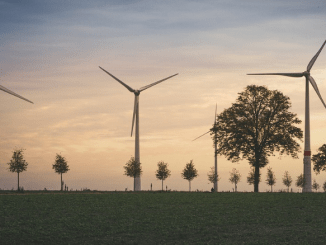
New battery technologies are widening the possibilities for clean energy. The emerging future looks like a wider choice of chemistries, each built for a different job.
Mobilized News | October 29, 2026
A lighter battery could make an electric vehicle more efficient. Longer-duration storage could help a community use renewable electricity through periods of low generation. More abundant materials could give manufacturers additional supply options.
These are some of the goals driving the next battery race.
The big idea: Lithium-ion faces growing competition while continuing to improve. The evidence points toward a more diverse battery industry, with different technologies serving different needs.
The reality check: Lithium iron phosphate, or LFP, accounted for more than 55% of the battery capacity deployed in new electric vehicles globally in 2025, according to the International Energy Agency. LFP is a lithium-ion chemistry. Its expansion is part of lithium-ion’s evolution. IEA
Why this matters for clean energy
Batteries store electricity for later use. Better storage can help connect renewable generation with the times people need power.
But a car, a phone, and a community electricity system have different requirements. Weight, size, cost, safety, and storage duration involve trade-offs. U.S. GAO
That is why the next generation is developing along several paths.
1. Sodium-ion: broadening the materials base
Sodium-ion batteries use sodium ions to carry charge in place of lithium ions.
Their appeal includes a more abundant element and potential supply-chain advantages. Their challenge is competing with increasingly refined lithium-ion products on cost and energy density—the amount of energy stored for a given weight.
Sodium-ion generally stores less energy per kilogram than leading lithium-ion alternatives. IEA
Who is building it: CATL and CHANGAN unveiled a sodium-ion passenger vehicle in February 2026. In April, CATL said it was targeting full-scale production of its Naxtra sodium-ion battery by the end of 2026. catl.com
Where it stands: Early commercial applications and manufacturing expansion. The year-end production target is a company announcement, not proof of completed output.
What to watch: Actual deliveries, installed costs, performance in different climates, and whether manufacturing spreads beyond today’s concentrated supply chains.
2. Solid-state: changing what is inside the battery
Solid-state batteries replace a conventional liquid electrolyte with a solid material. Developers are pursuing higher energy density and potential safety improvements. Many designs still use lithium.
Who is testing it: BMW and Solid Power announced road testing of all-solid-state cells in a BMW i7 in May 2025.
BMW identified practical questions including cell expansion, operating pressure, temperature, and integration into a complete battery pack. press.bmwgroup.com
Where it stands: Vehicle testing and continued development for this example. It demonstrates progress beyond a laboratory cell, while further work is needed to create a competitive production system.
What to watch: Reliable operation over years, manufacturing consistency, and the performance of the whole pack.
3. Iron-air: storing electricity over several days
Iron-air batteries target a different problem: providing electricity over extended periods.
Form Energy’s system uses reversible rusting. Discharging converts iron to rust using oxygen from the air; charging reverses the process. The company designs its system to deliver electricity for up to 100 hours. Form Energy
Who is developing it: Form Energy and Great River Energy’s Cambridge project in Minnesota is a utility pilot designed around multi-day storage. greatriverenergy.com
Where it stands: Utility pilot projects intended to test performance over multiple years.
What to watch: Long-term field performance, energy losses, land requirements, and installed cost.
A 100-hour design is a choice about the system’s job and economics. It does not mean lithium-ion is physically limited to a few hours.
4. Lithium-sulfur: pursuing lighter batteries
Lithium-sulfur combines lithium with a sulfur-based cathode. Researchers and developers are pursuing greater energy storage for a given weight and alternatives to conventional cathode materials. It still uses lithium. U.S. GAO
Who is developing it: Lyten says its lithium-sulfur cells are available for unmanned aircraft. It also describes a multi-year qualification process for electric vehicles and other transport applications. Lightweight Lithium-Sulfur Cells
Where it stands: Company-reported availability for specialized uses, with broader transport qualification continuing.
What to watch: Cycle life, consistent manufacturing, and performance under the conditions a finished product will face.
What makes a battery “super”?
A useful breakthrough needs to succeed beyond a headline specification.
When assessing a claim, ask:
- What was tested? A material sample, a cell, a complete pack, or an installed system?
- Under what conditions? Include temperature, charging speed, pressure, and repeated use.
- How long does it last? Track remaining capacity and useful energy delivered over its lifetime.
- What does the complete system cost? Include installation, controls, cooling, maintenance, and replacement.
- What evidence is available? Distinguish independent testing, customer experience, and manufacturer projections.
These questions help turn announcements into information people can use.
Clean energy requires a complete lifecycle
Mobilized’s public-interest test also includes how materials are sourced, how workers and communities are treated, how equipment is maintained, and what happens at the end of its useful life.
A battery’s environmental value depends on its production, durability, use, and eventual recovery. Its contribution also depends on the electricity used to charge it.
More abundant materials can open opportunities. Responsible production and practical recycling still need deliberate design.
What comes next?
The strongest inference from these developments is a battery portfolio: lithium-ion continuing to improve, sodium-ion seeking suitable markets, solid-state and lithium-sulfur advancing through qualification, and iron-air pursuing multi-day grid storage.
Some technologies will compete. Others will work alongside one another.
For communities, the useful question is which storage system can deliver dependable service at an acceptable lifetime cost and environmental impact.
That is where the battery race becomes a clean-energy story people can live with.