
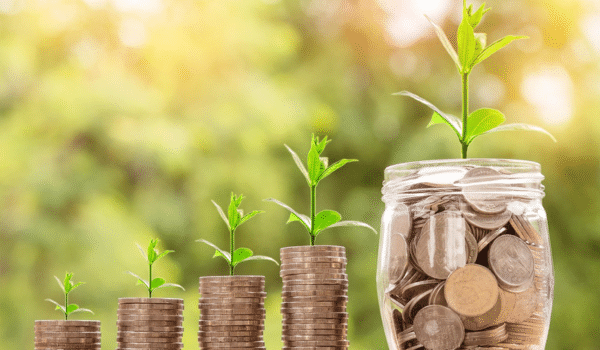
Transforming Our Financial Systems
Money is one of humanity’s most powerful tools.
The question is not simply how much money exists.
The question is:
Where does it flow, who benefits, what does it finance—and what kind of future does it help create?
What is wrong?
Much of the financial system rewards short-term returns while communities, small businesses, infrastructure, regenerative enterprises and emerging solutions can struggle to obtain affordable capital.
Money can circulate globally while bypassing the places where people actually live.
Communities can have enormous needs while local savings, pensions, investments and institutional capital are invested somewhere else.
And businesses designed around extraction, consumption and continuous resource use can often be easier to finance than newer models designed around durability, restoration, reuse and long-term resilience.
The result is a disconnect:
Money → investment → extraction → concentration → vulnerability
But finance does not have to operate this way.
Money is infrastructure.
It can be redesigned to help communities build the systems they actually need.
What is working?
Models already demonstrating different approaches include:
- Community development financial institutions
- Credit unions and cooperative banking
- Community investment funds
- Local and regional lending networks
- Public and development finance
- Circular-economy finance
- Green and sustainability-linked finance
- Blended finance and catalytic capital
- Regenerative and nature-positive investment
- Employee and community ownership
- Local business investment
- Affordable microfinance and small-enterprise lending
- Community land and housing finance
- Participatory budgeting
- Place-based investment
- Long-term infrastructure investment
The transformation is straightforward in principle:
Finance what we want more of.
Instead of financing systems that continuously extract value from communities and ecosystems, financial institutions can increasingly direct capital toward activities that create durable value.
That means supporting:
Healthy communities.
Affordable housing.
Clean energy.
Local food systems.
Circular manufacturing.
Independent businesses.
Public infrastructure.
Education.
Healthcare.
Resilient supply chains.
Nature restoration.
New technologies.
And enterprises designed to create lasting social and ecological value.
The emerging model becomes:
Savings → investment → productive capacity → shared value → resilience
Seven discussion questions
- Where does our money go?
Where are local deposits, pensions, investments and institutional funds actually invested? - What is not being financed?
Which important community needs, entrepreneurs and solutions cannot obtain affordable capital? - What should money be helping us build?
Housing? Energy? Food systems? Local businesses? Healthcare? Infrastructure? New technologies? - How can finance support circularity?
How can investment reward durability, repair, reuse, resource efficiency and regeneration instead of continuous extraction? - How can more wealth remain within communities?
What cooperative, community-owned and locally financed models already exist? - How do we measure real returns?
Should financial performance include resilience, health, employment, environmental restoration and long-term community value? - What financial action can participants begin locally?
Move deposits? Support a credit union? Find a CDFI? Invest locally? Finance a cooperative? Create a community fund?
From extractive finance to regenerative finance
The transition is not about eliminating markets, banks, investment or profit.
It is about improving what they are designed to accomplish.
A financial system designed primarily around extracting maximum short-term financial value produces very different outcomes from one designed to strengthen productive capacity over generations.
The transformation looks like this:
Extraction → regeneration
Speculation → productive investment
Concentration → participation
Short-term return → long-term resilience
Debt dependency → productive capacity
Disconnected capital → place-based investment
Finance as an end → finance as a tool
The bigger opportunity
Every major systems transformation requires financing.
Clean energy requires capital.
Circular manufacturing requires capital.
Affordable housing requires capital.
Regenerative agriculture requires capital.
New transportation systems require capital.
Independent media requires capital.
Community infrastructure requires capital.
The solutions may already exist.
The people may already exist.
The technology may already exist.
The missing connection is often the capital required to move them from possibility to reality.
This is why transforming finance is not simply another sector of systems change.
Finance is one of the systems that makes transformation in every other system possible.
Session outcome
Develop a simple community finance pathway:
Local need → Existing solution → Financing gap → Available capital → Potential partner → First investment
Then ask one final question:
What would happen if more of our money was intentionally invested in creating the world we actually want to live in?