
INSIGHTS
Perception and Reality
PLEASE NOTE: Mobilized is apolitical. We do not endorse any political party or candidate. However, in these divisive times, we recognize that open discussion is necessary for the resolution of divergent opinions. Consequently, we have added a new section called FORUMS that will host important OPINIONS posted my Mobilized Members. These are the opinions of the members alone and do not represent Mobilized News.
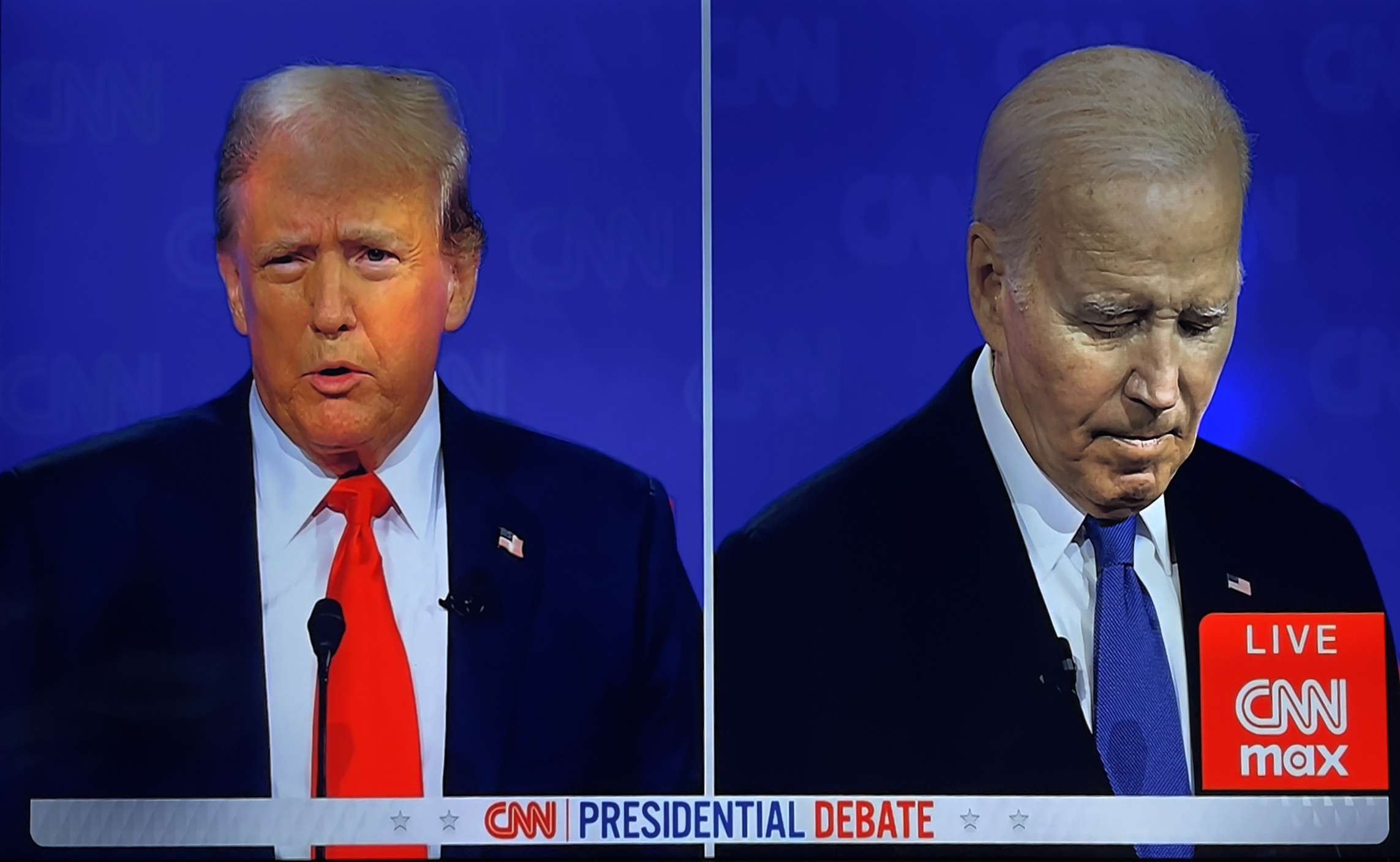
To call the US (June 27, 2024) Presidential debate on June 27, 2024a “train wreck” is a colossal understatement.
It was an unmitigated disaster of epic proportion with consequences for this nation that cannot be reversed. It was an affirmation of everything being said about Biden’s age and a free pass for Trump to lie his way into the Whitehouse.
By Michael Caporale
It is a principal tenet of advertising doctrine that you sell to perception, not to the reality. Trump was selling to perception. With no one to fact check him, he overwhelmed Biden with a non-stop torrent of lies, all told with an aggressive and energetic, free-flow of impromptu “connect-the-dots,” where everything, no matter what issue, or whether germane to the question asked, led back to Biden failures. He performed a rant of conviction like that of a possessed fanatic. His orange spray-on tan created the perception of health and was a take-away of the lessons learned by Nixon’s lack of makeup in the Kennedy TV debates, historically referenced as a reason for Nixon’s electoral loss. Trump was colorful, vibrant and bursting with energy.
Biden on the other hand was ashen, pale and somber. He made very little eye contact with the camera, the eyes of the home audience, instead looking down as if hanging his head in guilt and shame. Aghast, his open mouth created the appearance of befuddlement. That is the perception he created. His hoarse and raspy voice betrayed his poor health, as he stumbled through misspoken words while correcting himself, further adding to the perception that he was lost in his reply. The truth of what he said–the reality of his time in office and the success of his policies, his vision for the future, his predictions of Trump’s impact on democracy—none of that mattered. It further reaffirmed the incompetence of a clueless Democratic party to congeal a marketable argument for his re-election, one that sold to perception rather than relied on their reality. To be clear, his reality and your reality are very different matters, but your perception will determine the outcome of the election.
“This election is not about conservatives versus liberals or the values of moderates, but it’s really about fanatics versus lemmings and whether political leaders can escape their orbit of seriously incompetent and tragically flawed parties.”
Trump’s reality is that Trump is a liar. It’s documented fact that he told over 30,000 lies in his time in office, in his capacity as President.
- It’s a reality that Trump tried to illegally overturn the election through surrogates, fake electors, court challenges and a plea to Mike Pence to violate the constitution.
- It’s a reality that Trump lost the 2020 election and every subsequent court challenge.
- It’s a reality that he encouraged and fueled the January 6th insurrection.
- It’s a reality that he’s a convicted felon.
- It’s a reality that he faces several state and federal indictments.
- It’s a reality that he is a serial philanderer, had sex with a porn star and habitually sexually assaulted many women.
- It’s a reality that he has committed fraud in business and in his taxes.
- It’s a reality that he owes over half a billion dollars in judgements in cases he has lost.
- It’s a reality that he bankrupted a casino! Just how bad do you have to be as a businessman to bankrupt a casino?
- It’s a reality that he used the Presidency as a conduit for his business enterprises like his Washington hotel, Mara Lago and club memberships with promises of access.
- It’s a reality that it is his common practice to stiffs his suppliers.
- It’s a reality that he illegally removed Top-Secret documents from the Whitehouse and attempted to obstruct their recovery.
- It’s a reality that he ripped children from their immigrant mothers and caged them, while deporting their mothers without first establishing a paper trail whereby they might be reunited at a later date.
- It’ a reality that he conspired with Communist leaders and openly embraces the policies of dictatorial strongmen.
- It’s a reality that he favors abandoning NATO.
- It’s a reality that he supports racist and anti-semitic organizations.
Need I go on? These are just some of the many data points on Trump’s reality. But when he opens his mouth, he creates his own perception.
The perception of Biden is well founded, not solely by his aged physical missteps, falling up the steps to his plane or while riding a bicycle, but by his measured responses to crisis. While it may be said that he is contemplative, a desirable quality in a leader, it may also be said that he is not decisive, often coming to the right decision, but too little, too late. Biden is above all else a good man. He is a well-intentioned human being with a positive track record. He’s honest and reasonable, considerate and kind, all good qualities found in a boy scout but that seem to be overlooked when seeking a results-oriented President.
Biden needs to step down. NOW! He can never turn his ship around. He’s in the middle of the ocean with a dead engine and he can’t make the shore.
- This poses a very tricky problem for the Democratic party.
- If he stays in the campaign, he will lose to Trump.
- If he leaves, then Trump will remain the nominee.
- In an open convention, what Democratic leader can win against Trump?
But if Biden remains the nominee, then it was previously likely, but now no longer, that the GOP would have had an open convention and Nikki Haley would have been the most likely nominee. But truth be told, all that evaporated with Biden’s abysmal performance at the debate. Now I’m pretty sure Nikki Haley would win over Biden. While she’s better than Trump, she’s still a party creature and we would have to endure another very bad four years governed by a corrupt party in disarray.
This election is not about conservatives versus liberals or the values of moderates, but it’s really about fanatics versus lemmings and whether political leaders can escape their orbit of seriously incompetent and tragically flawed parties.
INSIGHTS
The most important governance word never used.
As the U.S. approaches the 250th anniversary of “Declaration of Independence” only 61 days away, it’s past time we consider the most damaging word in American history. It has led to more deaths, environmental destruction, and hate than any other. The word is independence.
By Chuck Woolery, Rockville, Md.
A careful reading of the 1776 Declaration reveals something transformative. The noun “independence” appears nowhere in its text or original title “The unanimous Declaration of thirteen United States of America”, the world’s most profound document. It rightfully and justly declared the colonies desire to be “Free and Independent States,” and used the adjective “independent”, not the noun “independence” a thing. A thing that Albert Einstein later called a “delusion”.
This distinction is the difference between true freedom (the Declaration’s original intent) and the mass murdering chaos that both the U.S. Constitution and the U.N. Charter unleashed globally.
An independent state (or states) can possess political autonomy existing within a web of relationships, responsibilities, and be mutual dependent on other states (or nations). Unfortunately, the word “Independence” has evolved in our mind’s imagination as something absolute: self-sufficiency, exceptionalism, immunity from consequences beyond our borders, and worth mass killing and dying for, as well as ignoring nature, the basis of all human health, wealth, and other life on earth.
This could have – should have stopped immediately after the invention and use of nuclear weapons. Einstein warned about it, yet the UN Charter was founded on the same delusional concept as the U.S. Constitution. Both ignored the wisdoms offered in the 1776 Declaration based on “the Laws of Nature and of Nature’s God” (in common speak, ‘take care of nature and each other’ because everything is interdependent and vulnerable).
Ironically, we annually celebrate our illusion of independence every July 4th using explosives and eating nitrate loaded meats that cause cancer. Then over 250 years of repetition, celebration, and civic mythology, that single word blunder has hardened into our minds a global worldview that has shaped our perception of reality and killed hundreds of millions of people. Because independence exists nowhere in known universe except as a word on paper, in sound, or as a delusional concept in our mind.
No human being is independent of oxygen, food systems, ecosystems, microbes, gravity, family, trade, or civilization itself. No nation is independent of climate systems, oceans, pandemics, financial networks, or global stability. Even stars depend upon relationships with gravity and matter. Interdependence is not a political opinion; it is the architecture of reality.
And yet our governing systems still behave as if independence were achievable. Ironically, both the U.S. constitutional framework and the United Nations Charter are rooted in sovereign independence as their organizing principle. We continue attempting to solve planetary-scale crises — climate disruption, pandemics, cyberwarfare, nuclear risks, migration, and ecological collapse — with governance structures designed around fragmented and delusional sovereignty.
Then wonder why the systems fail and things are getting worse.
Perhaps the deepest challenge of our species is to accept our irreversible interconnectedness and interdependence. And learn to govern everyone and nature wisely, fairly, and ethically. Thus, the most important word in America’s founding document may be the one that was never actually written into law.
INSIGHTS
Don’t Fear the Future
Every tool can be used for good–or bad.
- A hammer can build a house.
- A hammer could kill a person.
We should not be afraid of AI.
We should be afraid of unaccountable power using AI without ethics, oversight, or public understanding.
By Steven Jay
AI is a tool.
Like fire, electricity, television, money, medicine, or the internet — it can help people heal, learn, organize, create, solve problems, and see patterns.
It can also be used to manipulate, exploit, surveil, replace, divide, and control.
The question is not whether AI is good or bad.
The question is:
- Who controls it?
- Who benefits from it?
- Who is harmed by it?
- And how do we make sure it serves life — not power alone?
The Big Question
Should we be afraid of AI?
- Not exactly.
- Fear alone does not help us understand change.
- But blind excitement is dangerous too.
AI is moving into every part of life:
- Media.
- Education.
- Health care.
- Finance.
- Transportation.
- Government.
- War.
- Work.
- Art.
- Search.
- Science.
- Everyday decision-making.
That means AI is not just a technology story.
It is a systems story.
- It affects how we know what is true.
- How we make decisions.
- How we organize society.
- How power moves.
- How people work.
- How communities respond to crisis.
- How the future is designed.
Why It Matters
AI can help humanity do things we badly need.
- It can detect patterns humans miss.
- It can help doctors diagnose disease earlier.
- It can help farmers use less water.
- It can help communities prepare for floods, fires, and storms.
- It can translate languages.
- It can help small organizations produce media, maps, research, and learning tools.
- It can make knowledge more accessible.
But AI can also make existing problems worse.
- It can spread false information faster.
- It can deepen surveillance.
- It can automate discrimination.
- It can replace workers without a plan for human dignity.
- It can concentrate power in the hands of a few companies and governments.
- It can make people dependent on systems they do not understand.
AI reflects the values of the systems that build and deploy it.
That is the real issue.
The Mobilized View
- AI is not magic.
- AI is not a god.
- AI is not a replacement for human wisdom.
- AI is a tool created by people, trained on human information, shaped by human choices, and deployed inside human systems.
So, the future of AI depends on the same thing every major tool depends on:
- Governance.
- Ethics.
- Transparency.
- Education.
- Accountability.
- Public participation.
- Human purpose.
The danger is not intelligence itself.
The danger is intelligence without wisdom.
The Better Question
Instead of asking:
“Will AI destroy us?”
We should ask:
“How do we design AI so it helps us restore health, dignity, democracy, and well-being?”
- That changes the conversation.
- It moves us from fear to responsibility.
It asks whether AI can help us:
- Spot risks earlier.
- Strengthen local communities.
- Improve public health.
- Support teachers and students.
- Expose corruption.
- Translate complex issues into clear action.
- Help people understand systems.
- Connect solutions across the world.
- Make better decisions faster.
Used wisely, AI can help people see the whole picture.
Used recklessly, it can distort the picture completely.
What AI Can Help Us Do
1. Make Complexity Easier to Understand
- The world is overloaded with information.
- Most people are not lacking data.
- They are lacking clarity.
- AI can help organize complex information into patterns people can understand.
- That matters for climate, health, energy, food, democracy, economics, and crisis response.
Signal → System → Solution → Action.
- That is where AI can be useful.
- Not as the source of truth.
- As a tool to help people ask better questions.
2. Help Communities Act Faster
- AI can support local problem-solving.
A community group could use AI to:
- Map local food needs.
- Find clean energy options.
- Translate public documents.
- Create emergency plans.
- Compare policy models.
- Build public education campaigns.
- Identify partners and funding opportunities.
- Summarize public meetings.
- Turn expert knowledge into action guides.
This is where AI becomes useful.
Not as a replacement for people.
As a support system for people trying to get things done.
3. Expand Access to Knowledge
- For too long, useful knowledge has been locked behind institutions, paywalls, jargon, and professional gatekeeping.
- AI can help translate expert knowledge into plain language.
- That can help students, workers, organizers, journalists, small businesses, local governments, and citizens understand what is happening and what they can do.
- But access must be paired with accuracy.
- A fast answer is not always a true answer.
That is why human verification still matters.
4. Improve Public Interest Media
AI can help journalists and media makers:
- Track signals.
- Summarize reports.
- Compare claims.
- Organize research.
- Find patterns across sectors.
- Translate stories into multiple languages.
- Build explainers.
- Create accessible formats for different audiences.
But AI should not replace journalism.
It should strengthen journalism.
The public still needs editors, reporters, investigators, community voices, source verification, and moral judgment.
AI can support the work.
It should not become the newsroom’s conscience.
Where the Risks Are Real
Misinformation
- AI can produce convincing falsehoods at scale.
- That means people need stronger media literacy, better verification tools, and trusted public-interest information systems.
Surveillance
- AI can be used to monitor people, predict behavior, and control populations.
- This is especially dangerous when used by governments, employers, platforms, or private firms without transparency.
Bias
- AI systems can repeat and amplify the biases built into their data.
- Bad data creates bad decisions.
- That can harm people in hiring, housing, policing, lending, health care, and education.
Job Disruption
- AI will change work.
- Some jobs will disappear.
- Some will change.
- Some new ones will emerge.
The issue is not whether work changes.
The issue is whether people are protected, trained, included, and respected during the transition.
Power Concentration
- If only a handful of corporations control the most powerful AI systems, the public loses leverage over the future.
- AI must not become another tool for extracting wealth, attention, and control from people.
The Bottom Line
We should not fear AI as a machine.
We should question the systems around it.
- Who owns it?
- Who trains it?
- Who audits it?
- Who profits from it?
- Who gets access?
- Who is left out?
- Who decides the rules?
AI can help us build a healthier world.
But only if we build the guardrails first.
Technology does not create a better future by itself.
People do.
What We Can Do Now
For Citizens
- Learn how AI works.
- Question what it produces.
- Check sources.
- Use it to learn, organize, and create.
- Do not outsource your judgment.
For Journalists
- Use AI as a research assistant, not a truth machine.
- Disclose when it is used.
- Verify everything.
- Protect human sources and editorial independence.
For Educators
- Teach AI literacy early.
- Help students understand bias, evidence, authorship, and ethics.
- Use AI to expand learning, not replace thinking.
For Policymakers
- Require transparency.
- Protect privacy.
- Regulate high-risk uses.
- Support public-interest AI.
- Prevent monopoly control.
- Defend human rights.
For Communities
- Use AI to strengthen local resilience.
- Map needs.
- Share knowledge.
- Connect solutions.
- Make participation easier.
Mobilized Takeaway
- AI is not the future.
- The future is what people decide to do with AI.
- It can become another system of control.
- Or it can become a tool for collective intelligence.
- It can deepen confusion.
- Or it can help create clarity.
- It can serve extraction.
- Or it can serve life.
- The choice is not automatic.
- The choice is ours.
Final Word
We do not need to be afraid of AI.
We need to become informed enough to shape it.
Because a well-informed public is still the most powerful and valuable natural resource of all.
Better Understandings
The health care evolution whose time is now
We are entering a new era of healthcare based on a categorically different kind of medicine whose purpose isn’t just to save us from illness, but to help us be the best version of ourselves.
Discover Mobilized’s interview with RethinkX Co-founder, James Arbib
About Rethink X
RethinkX is an independent not-for-profit research organization that analyzes and forecasts technology-driven disruptions and their implications. We produce impartial, data-driven analyses that identify pivotal choices to be made by investors, policymakers, civic leaders, and other decision-makers.
Our research team uses the Seba Technology Disruption Framework( TM) to understand the dynamics of disruption and their associated interactions among technology, business models, and market forces.
We then leverage this understanding to forecast the scope, speed, and scale of a disruption’s impacts across social, economic, geopolitical, environmental, and other dimensions, and their implications for market sectors, industries, and geographic regions.
RethinkX aims to facilitate a robust global conversation about the threats and opportunities of technology-driven disruptions, and highlight choices that could lead to a more equitable, healthy, resilient, and stable future for all of humanity


