July 9, 2026: 1 PM ET, 10 AM PT, 6 PM UK, 7 PM CAT/CET
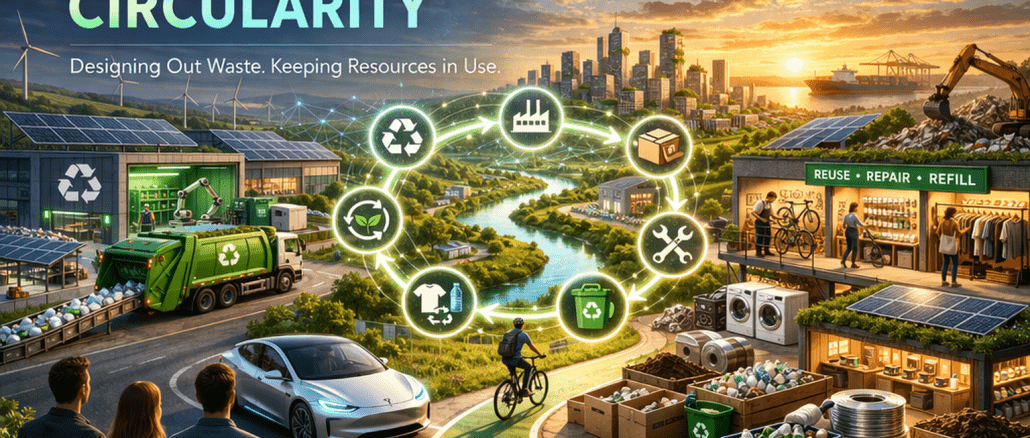
Designing systems where nothing is wasted and everything flows — from extraction to regeneration
🧠 The Core Question
How do we redesign production and consumption systems so materials stay in use, waste is eliminated, and value is continuously regenerated?
⚡ Why This eXchange Matters
Today’s economy is largely linear:
Take → Make → Use → Waste
- Resources are extracted faster than they regenerate
- Products are designed for disposal, not longevity
- Waste is treated as an endpoint, not a design flaw
👉 The result:
- Supply chain instability
- Rising costs of raw materials
- Environmental degradation
- Massive inefficiencies hidden in plain sight
But there’s a better model:
Nature operates in loops — nothing is wasted, everything is reused.
👉 Circularity brings that logic into human systems.
🔍 What This eXchange Explores
1. Designing Out Waste
- Products built for durability, repair, and reuse
- Modular design + disassembly
- Eliminating planned obsolescence
2. Materials as Assets (Not Waste)
- Tracking materials across their lifecycle
- Recovering and reintegrating valuable inputs
- Creating secondary material markets
3. Circular Production Systems
- Closed-loop manufacturing
- Industrial symbiosis (one system’s waste = another’s input)
- Distributed + localized production models
4. Rethinking Supply Chains
- From fragile global chains → resilient circular networks
- Reducing dependency on virgin materials
- Increasing transparency and traceability
5. Business Models for Circularity
- Product-as-a-service (access over ownership)
- Leasing, sharing, and take-back systems
- Incentivizing longevity over volume
6. Policy + Standards
- Extended producer responsibility (EPR)
- Circular design standards
- Procurement policies that reward sustainability
🧭 The Flow of the eXchange (90 Minutes)
1. Signal Brief (Reality Check)
What’s happening now:
- raw material volatility
- waste accumulation trends
- supply chain disruptions
- regulatory shifts toward circularity
2. Frontline Perspectives
Voices from:
- manufacturers
- circular economy innovators
- materials scientists
- policy leaders
3. Systems Mapping
Trace the loop:
- Materials → Production → Use → Recovery → Reuse
👉 Where value is lost
👉 Where circular loops can be closed
4. Solutions Lab
What’s already working:
- zero-waste manufacturing models
- circular fashion + electronics initiatives
- material recovery + recycling innovations
- industrial ecosystems sharing resources
5. Interdependence Bridge
Circularity connects to:
- Energy → efficiency + reduced extraction
- Climate → emissions reduction
- Economy → cost savings + new markets
- Communities → local production + jobs
6. Mobilized Action
Turn insight into implementation:
- circular pilots and partnerships
- tools for redesigning products and systems
- pathways for businesses + communities to transition
🛠️ What Participants Gain
- Clarity → Where waste and inefficiency actually exist
- Insight → How circular systems function in practice
- Connection → Network of innovators across sectors
- Action Pathways → Practical ways to implement circularity locally
🌍 The Bigger Vision
Circularity is not just recycling —
It’s a complete redesign of how we create and use value.
👉 Waste becomes input
👉 Products become services
👉 Systems become regenerative
This is how we move from:
- Linear extraction → circular flow
- Scarcity mindset → resource intelligence
- Hidden waste → visible opportunity
🚀 The Outcome
A shift from:
- Throwaway culture → value retention
- Fragile supply chains → resilient systems
- High-cost inputs → recovered resources
- Environmental harm → regenerative production
📣 Call to Action
If waste is simply a design failure…
Then circularity is the solution.
👉 Join the Mobilized eXchange
👉 Help redesign how the world produces and consumes
👉 Turn materials into continuous value, not end-of-life waste
If you want next, I can turn this into:
- WordPress HTML block (ready to paste)
- Circularity system diagram (Canva/Figma)
- Speaker lineup + outreach emails
- Full Circular Economy Playbook PDF