
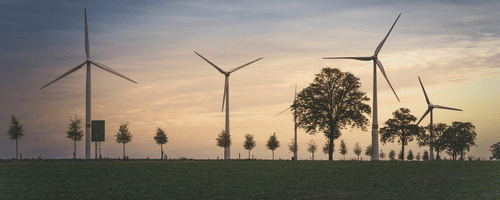
Energy Transition: From Centralized Control → Community-Powered Abundance
There isn’t an energy shortage. There’s a system design problem.
The shift:
From centralized, fragile grids → to distributed, locally owned energy networks
The Flip
Old model:
Centralized generation. Distant control. Fragile systems.
New model:
Distributed energy. Local ownership. Resilient networks.
This isn’t just energy—
It’s about who has power
What changed
Across systems:
- Solar scaling faster than expected
- Microgrids stabilizing communities
- Energy storage accelerating
- Grid outages increasing
- Communities demanding energy sovereignty
Direction of travel:
- Centralized → Distributed
- Scarcity → Abundance potential
Why it matters
Energy underpins:
- Food systems
- Water systems
- Mobility
- Economic activity
When energy fails, everything fails
But when energy becomes local:
- Costs decrease
- Reliability improves
- Communities gain control
Energy becomes a resilience multiplier
The root problem
The current system was built for a different era:
- Centralized generation + long transmission
- Utility models resistant to change
- Regulations designed for fossil systems
- Limited local ownership
Bottom line:
The grid isn’t broken—
It’s outdated
The Reframe
Shift the model:
From grid as pipeline → to grid as network
Where:
- Buildings produce energy
- Communities store energy
- Systems share energy
Outcome:
Abundance by design
📡 What we’re seeing (signals)
- Distributed solar + microgrids expanding
- Grid stress + outages rising
- Storage unlocking system flexibility
- Local movements pushing for independence
Pattern: pressure on centralized systems → acceleration of decentralized alternatives
Where it breaks
System constraints reveal opportunity:
- Centralization = single points of failure
- No ownership = limited participation
- Legacy rules = slow adoption
Constraint = entry point for redesign
What’s working (solutions)
Already scaling:
- ⚡ Distributed solar + microgrids
- 🔋 Community batteries + virtual power plants
- 🤝 Energy co-ops + local ownership
- 🌍 Indigenous + rural energy independence models
Proof: decentralized systems are viable now
Build the future
Emerging system designs:
- Hybrid, flexible grid architectures
- Community ownership frameworks
- Decentralized energy coordination
- Equity + access built into infrastructure
Outputs:
- Scalable decentralized energy models
- Community energy playbooks
- Grid-of-the-future frameworks
What you can do
Start locally:
- Launch or support a microgrid
- Join or build an energy co-op
- Partner with utilities + innovators
- Participate in collaborative working groups
Systems change starts at the community level
The Bigger Shift
This is not just energy.
It reshapes:
- Economic participation
- Community resilience
- Local sovereignty
When energy becomes abundant—
Everything else expands
Final Take
We’ve been asking:
How do we generate more energy?
👉 Wrong question.
Better question:
How do we design systems where energy is shared, owned, and abundant?
Mobilized Signal
Energy systems are shifting from centralized control → distributed resilience.
This is a foundational transition across all sectors
Signals → Systems → Solutions → Action