
Change the system, and the outcomes change.
Short answer: Africa’s poverty isn’t caused by a lack of resources. It’s caused by how power, ownership, and systems have been structured around those resources.
Here’s the clear breakdown.
The paradox
Africa holds a large share of the world’s gold, cobalt, diamonds, oil, gas, fertile land, solar potential, and young labor force—yet many people remain poor.
That’s not accidental.
Resource extraction without local benefit
For decades, Africa’s resources have been extracted and exported rather than processed locally.
- Minerals leave as raw ore
- Oil leaves as crude
- Agricultural goods leave unprocessed
➡️ Value is added elsewhere, while African communities receive:
- Low wages
- Limited tax revenue
- Environmental damage
This is called value leakage.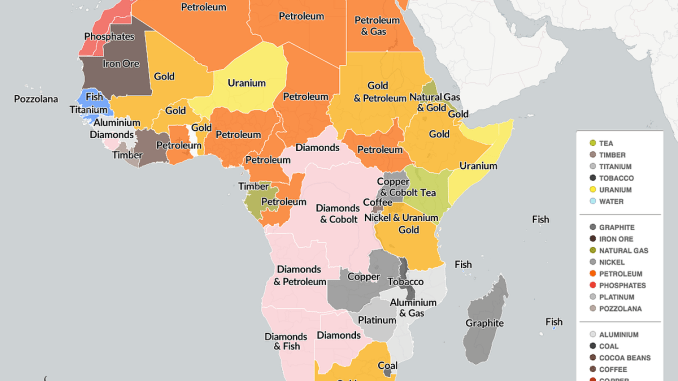
Colonial systems never fully ended
Colonial rule formally ended—but economic structures remained:
- Borders designed for extraction, not cooperation
- Economies shaped around supplying Europe and the U.S.
- Legal systems favoring foreign ownership
Many African states inherited weak institutions designed to move resources out, not build prosperity within.
3) Debt traps and financial control
Many countries spend more on debt repayment than on health or education.
- Loans often tied to austerity
- Currency systems controlled externally
- Profits repatriated to foreign banks
➡️ Governments struggle to invest in their own people.
4) Foreign corporations capture the upside
Mining, oil, and agribusiness sectors are often dominated by multinational companies:
- Tax avoidance through loopholes
- Profits sent offshore
- Minimal reinvestment locally
Even when GDP grows, wealth doesn’t reach households.
Governance stress (not cultural failure)
Corruption exists—but it thrives where:
- Institutions are underfunded
- Leaders face external pressure
- Resource rents distort incentives
This is a systems problem, not a people problem.
6) Global rules are stacked
Trade rules, patents, shipping, insurance, and finance are written by wealthy nations.
- African countries pay more to borrow
- Earn less for exports
- Face barriers to industrialization
The playing field is tilted.
The truth most headlines miss
Africa isn’t poor.
👉 Africans are being made poor by extractive systems.
When countries:
- Own and process their resources
- Build local energy, food, and manufacturing
- Keep value circulating locally
Poverty drops—fast.
What actually works (and is already happening)
- Local mineral processing & battery manufacturing
- Community-owned renewable energy
- Regional trade (not dependency exports)
- Debt restructuring tied to development
- Digital public infrastructure & cooperative platforms
These are design choices, not miracles.
Bottom line
Poverty in Africa is not a failure of land, people, or culture.
It is the result of how global systems were designed—and who they were designed to serve.
Change the system, and the outcomes change.