
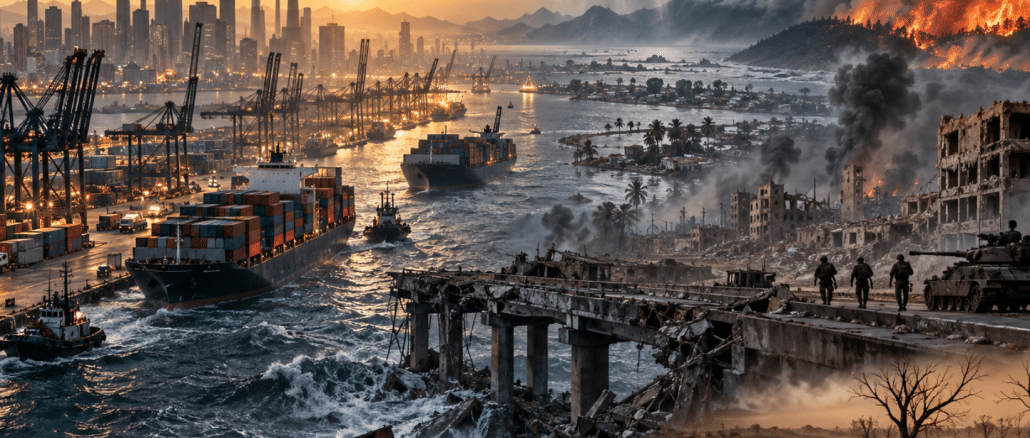
What happens when systems, structures and services break down?
When electricity, water, healthcare and communications fail, the consequences spread far beyond the original disruption. Protecting people requires institutions that understand these connections—and communities with a meaningful role in shaping them.
A power outage can become a water emergency when pumps stop working. A damaged road can become a health emergency when patients cannot reach treatment. A communications failure can prevent people from learning where help is available.
These connections reveal something fundamental: our daily lives depend on systems working together.
When those systems break down, people experience the consequences together—even when the agencies responsible continue to work separately.
A warning from Peru
In Peru, civil society is calling for preparation before an anticipated emergency becomes a humanitarian crisis.
Reporting published by Pressenza on October 15 describes an appeal from the Development Studies Network, known as Redes, for a contingency plan in the Loreto region ahead of potential El Niño impacts. The organization warns that the period of concern overlaps with a change in regional administration in January 2027.
Its demand is practical: establish responsibilities, coordinate authorities and prepare resources so an incoming government can continue the work without losing critical time.
The broader question reaches well beyond Peru:
Who keeps essential services functioning when circumstances change—and who ensures that people receive protection before damage occurs?
When one failure becomes many
A hospital may remain standing after a disaster yet struggle to function without electricity, clean water, communications, supplies or staff who can reach it.
This is why the United Nations Office for Disaster Risk Reduction describes infrastructure as a “system of systems.” Its guidance emphasizes examining dependencies and testing how disruptions can spread across essential services.
For communities, the consequences are immediate: missed treatment, interrupted education, lost income and uncertainty about what happens next.
Households with savings, transportation and alternative accommodation have more options. Those already facing insecurity may have little capacity to absorb another interruption.
Preparedness therefore needs to ask two questions together: Which services are vulnerable, and which people will need additional support when they fail?
Prevention is a public investment
The financial case for preparation is substantial.
The World Bank and the Global Facility for Disaster Reduction and Recovery’s 2019 Lifelines report estimated that making infrastructure more resilient in low- and middle-income countries could generate approximately four dollars in benefits for every dollar invested. That is a modeled average, rather than a guaranteed return for every project.
The human case is equally clear: maintaining essential services helps people preserve their health, livelihoods and ability to recover.
Practical approaches already exist. UNDRR reports that infrastructure assessments in Tonga informed stronger water emergency planning and groundwater monitoring. In Costa Rica, a data platform was developed to help guide infrastructure investment through risk analysis.
Such work requires sustained funding, skilled workers, maintenance and accountable institutions. Knowledge becomes protection when people have the resources and authority to apply it.
Communities must help shape the response
Residents know which streets flood, which neighbors need assistance and where official instructions fail to reach people.
That knowledge belongs in planning from the beginning.
Public authorities should bring residents, utilities, health workers, engineers, educators and community organizations into a shared process with clear responsibilities. Participation must influence decisions, budgets and delivery.
Community initiative also needs dependable public support. Volunteers cannot carry the permanent responsibility for services that require professional staffing and sustained investment.
A credible plan should make it possible for people to answer:
- What risks affect my neighborhood?
- Where will reliable information come from?
- How will essential services continue?
- Who will assist people who cannot evacuate independently?
- Who is responsible, and how can we assess their progress?
The Mobilized action pathway
For Mobilized News, this creates a clear editorial responsibility: connect reporting about failure with explanations of its causes, evidence of workable responses and opportunities to participate.
That means following a warning through to the budget, the responsible institution and the neighborhood awaiting protection. It means examining proposed solutions, reporting their limitations and returning to see whether promises were delivered.
Connected media can help communities exchange useful experience—and help the public hold decision-makers accountable.
The question we should ask before the next breakdown is straightforward:
What must we organize, fund and maintain now so people can continue to live safely when disruption comes?