
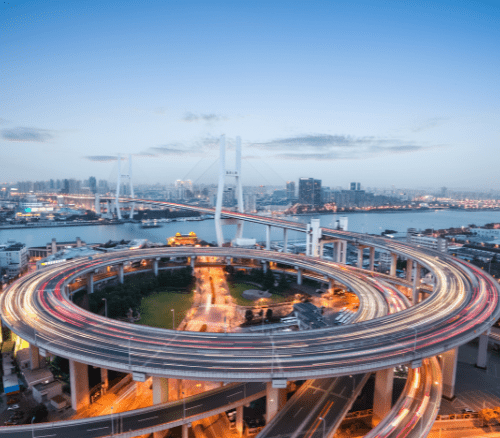
Why have we designed society so that millions of people must privately purchase an expensive machine simply to participate in daily life? The alternative is mobility as a universal public service.
What if we didn’t need to own a car to have freedom?
From transportation systems built around automobiles to mobility systems built around life.
- We don’t really want cars.
- We want to get somewhere.
- To work.
- To school.
- To healthcare.
- To food.
- To friends.
- To opportunity.
- To nature.
- To one another.
The product we actually need isn’t the automobile.
It’s mobility.
And that changes everything.
What do we have now?
For much of the past century, transportation policy has revolved around one assumption:
Everyone should have a car.
So we designed communities around it.
- Highways.
- Parking lots.
- Suburbs.
- Shopping centers.
- Office parks.
- Drive-throughs.
- Gas stations.
- Long commutes.
Then we told people:
Want access?
- Buy a vehicle.
- Finance it.
- Insure it.
- Maintain it.
- Fuel it.
- Park it.
- And replace it every few years.
In the United States, AAA calculated the average cost of owning and operating a new vehicle in 2025 at $11,577 a year — about $965 every month.
That is not simply transportation.
It is a private mobility tax.
And the cost isn’t only financial
- Road transportation emitted more than 6 billion tonnes of CO₂ in 2024, with passenger cars and vans responsible for more than 60% of those emissions. (IEA)
- Meanwhile, approximately 1.16 million people died in road crashes in 2025.
- More than half were pedestrians, cyclists or motorcyclists.
- Road injuries remain the leading cause of death globally for people ages 5–29.
We sacrifice:
- Land.
- Energy.
- Materials.
- Public space.
- Household income.
- Clean air.
- Community connection.
- And lives.
- Just to keep everything moving.
The question is not:
How do we build better cars?
The bigger question is:
How do we build better mobility?
Why do we still have this system?
- Because we built our communities around it.
- Once housing, employment, shopping and healthcare are separated by miles of roads, automobiles stop looking optional.
- They become necessary.
- That creates a powerful feedback loop.
- More cars.
- More roads.
- More parking.
- Greater distances.
- More congestion.
Then:
- More roads.
And there’s another reason
The private automobile became associated with:
- Freedom.
- Independence.
- Status.
- Privacy.
- Convenience.
- Mobility.
And in many places that argument is completely understandable.
Because if public transportation is unreliable, inaccessible or nonexistent:
The car really does provide freedom.
So telling people:
“Give up your car”
is the wrong message.
Flip the message
Don’t say:
Give up your car.
Say:
What if you didn’t have to own one?
That is a very different conversation.
Now flip the script
The old transportation system asks:
How do we move more cars?
The new system asks:
How do we move people?
And then asks something even bigger:
How do we move people and goods while improving the quality of life for everything along the way?
- People.
- Communities.
- Air.
- Water.
- Wildlife.
- Climate.
- Public space.
- Local economies.
- Future generations.
Mobility that serves all life
Imagine leaving your home.
For short trips:
Walk.
For slightly longer trips:
Bike or e-bike.
Going across town:
Bus. Tram. Train.
Traveling when regular transit isn’t practical:
On-demand public shuttle.
Need a vehicle for several hours?
Reserve a shared community car.
Need to move furniture?
Reserve a shared van.
Mobility limitations?
Accessible vehicle comes to you.
Rural community?
Demand-responsive transit + shared vehicles.
Long distance?
High-speed and regional rail where practical.
- One system.
- One application.
- One account.
- Many ways to move.
The real transformation
From:
Car ownership
to:
Mobility access.
From:
One person → one machine
to:
Many people → shared infrastructure.
From:
Transportation as a product
to:
Mobility as a public service.
And that brings us to a big idea
What about publicly owned cars?
We publicly own:
- Buses.
- Trains.
- Subways.
- Fire trucks.
- Ambulances.
- Libraries.
- Parks.
- Roads.
Why couldn’t communities also operate:
- Neighborhood electric vehicle fleets?
Think of it as:
The public library for cars.
- You don’t buy every book you might someday need.
- The community maintains a collection.
- You use what you need.
- When you need it.
- Then someone else uses it.
Why couldn’t vehicles increasingly work the same way?
The public car doesn’t replace public transit
It completes it.
- Buses and rail should carry large numbers of people efficiently.
- Walking and cycling should handle many short trips.
But sometimes you need:
- A car.
- A van.
- A wheelchair-accessible vehicle.
- A pickup.
- A vehicle late at night.
- A vehicle in a rural community.
So make one available.
Public ownership does not have to mean government owns everything
There are several possibilities.
Municipal ownership
Cities own fleets citizens can reserve.
Cooperative ownership
Members collectively own the vehicles.
Community ownership
Neighborhood organizations operate shared fleets.
Public-private systems
Public authorities establish the infrastructure while qualified operators provide services.
Employee + community fleets
Municipal vehicles serve government workers during the day and residents when otherwise idle.
The principle matters more than the label:
Maximum access. Minimum waste.
It is already happening
Vienna — public transport becomes a mobility network
Vienna offers an important glimpse of what integrated mobility can look like.
- Wiener Linien — ultimately 100% owned by the City of Vienna — operates the city’s subway, tram and bus system. (Wiener Linien Shop)
- In 2025 it carried 903 million passengers and had roughly 1.34 million regular customers — more regular transit customers than registered automobiles in Vienna. (Tram WM)
But Vienna didn’t stop at buses and trains.
Its WienMobil system includes:
- 3,100 shared bicycles.
- 300 shared e-bikes.
- 100 shared electric cars.
Those shared electric cars were rented more than 68,700 times in 2025, up 13% from the previous year. (Remise)
That’s the flip.
The public transportation agency increasingly becomes:
The public mobility agency.
Vienna tried another experiment
In 2025, dozens of households agreed to leave their personal cars parked for three months.
Instead they received a mobility budget they could use on:
- Transit.
- Bicycles.
- Car sharing.
- Rental cars.
- Taxis.
- Other alternatives.
At the end of the experiment, two-thirds of participants decided they could continue living without their own car. Nearly 3,000 households had applied to participate.
The lesson?
People may not be attached to car ownership.
- They may be attached to reliable mobility.
- Give them that first.
Luxembourg — what if public transport were simply public?
- Since 2020, Luxembourg has provided nationwide second-class buses, trams and trains free at the point of use.
- But the important lesson isn’t simply “make transit free.”
- Luxembourg kept investing in the system.
Between 2019 and 2024:
- Rail ridership increased from 25 million to 31.3 million passengers.
- Tram ridership grew from 6.2 million to 31.7 million, helped significantly by expansion of the tram network as well as fare-free service.
The government’s own conclusion is important:
Free isn’t enough.
Transportation also has to be:
- Reliable.
- Frequent.
- Comfortable.
- Connected.
- Useful.
Paris — give people an alternative and they use it
Paris has systematically reassigned street space toward:
- Walking.
- Cycling.
- Transit.
- Public space.
By 2025 the city reported 1,607 kilometers of cycling infrastructure.
- Cycling volume on its measured network was 47% higher than in 2020.
- Among resident workers, cycling’s share of commuting had reached 10.1% compared with 9% for automobiles.
The lesson:
Infrastructure changes behavior.
- Don’t lecture people about cycling.
- Build somewhere safe to cycle.
Catalonia — cooperatively owned cars
Som Mobilitat asks a wonderfully disruptive question:
Why own the car when you can own the mobility system together?
- It is a nonprofit consumer cooperative providing shared electric vehicles to residents, businesses, public administrations and energy communities.
- Each cooperative member has a voice and a vote.
- By May 2026, it reported more than 150 shared electric vehicles across Catalonia.
- Municipal governments can participate in models where a shared vehicle is used by public employees and also made available to residents.
That is a very different car company.
The objective isn’t:
Sell as many cars as possible.
It is:
Provide as much mobility as possible with fewer vehicles.
Switzerland — the car cooperative at national scale
Switzerland’s Mobility Cooperative demonstrates that shared automobile access can reach significant scale.
At the end of 2025 it operated:
- 3,260 shared cars.
- 1,650 locations.
- 298,000 users.
- The cooperative is now planning more than 1,000 additional vehicles over the next several years.
Again:
People still use cars.
They just don’t all need to own one.
This is the mobility flip
We don’t have to choose between:
Cars
and
No cars.
That’s an industrial-age argument.
The real choice is between:
Car dependence
and
Mobility freedom.
How do we get what we want?
Start with one principle:
Every person should be able to reach the essentials of life without being forced to own a car.
Then redesign around that goal.
1. Map access
- Don’t begin with traffic.
- Begin with people.
Can every resident reasonably reach:
- Jobs?
- Food?
- Schools?
- Healthcare?
- Parks?
- Government?
- Community?
- Transit?
- Measure access.
- Not vehicle speed.
2. Build the mobility ladder
Prioritize the least resource-intensive option that works.
Walking
↓
Cycling
↓
Public transit
↓
Shared vehicles
↓
Private vehicles
- That does not mean eliminating the last option.
- It means we stop designing everything around it.
3. Make public transit excellent
- Frequency matters.
- Reliability matters.
- Safety matters.
- Comfort matters.
- Accessibility matters.
- Night service matters.
- Connections matter.
A bus that arrives once an hour is not mobility freedom.
4. Create public mobility hubs
Imagine every neighborhood having:
- Bus connections.
- Bike share.
- E-bikes.
- Secure bike storage.
- EV charging.
- Shared electric cars.
- Accessible vehicles.
- Cargo bikes.
- Shared vans.
- Delivery lockers.
- Real-time information.
- One location.
- One mobility ecosystem.
5. Create the public car option
- Cities can begin small.
- Take part of the municipal vehicle fleet.
- Electrify it.
- Put vehicles at neighborhood mobility hubs.
- Create an easy reservation system.
- Allow residents to rent vehicles when government isn’t using them.
- Add cooperative and nonprofit fleets.
- Expand according to demand.
Don’t build a new car company.
- Build a mobility commons.
6. Design for everyone
“Without exceptions” should mean something.
A system cannot call itself sustainable if it works beautifully for an able-bodied professional downtown but fails:
- A wheelchair user.
- A night-shift worker.
- A parent.
- A child.
- An elderly resident.
- Someone without a smartphone.
- A rural community.
- A person without a bank account.
- A low-income household.
Mobility should be:
Universal by design.
Not accessible as an afterthought.
7. Connect land use to mobility
Transportation problems are often land-use problems wearing wheels.
- Why is the grocery store seven miles away?
- Why is housing separated from employment?
- Why can’t children safely walk to school?
- Why do zoning rules require enormous parking lots?
- Build communities where more daily needs are closer together.
The best trip may be the trip we don’t need a vehicle to make.
8. Stop subsidizing only the automobile
Look at the entire transportation budget.
- Roads.
- Parking.
- Fuel.
- Transit.
- Cycling.
- Walking.
- Shared mobility.
Ask:
Are we funding the system we say we want?
What about rural communities?
This is where oversimplified anti-car messaging fails.
Dense rail systems do not make sense everywhere.
Some people will continue needing personal vehicles.
That’s okay.
But rural mobility can still improve through:
- On-demand shuttles.
- Regional buses.
- Shared electric vehicles.
- Community vans.
- Medical transportation.
- School transportation integrated with other services.
- Car cooperatives.
- Ride coordination.
- Mobility hubs in town centers.
Different places need different tools.
The goal remains the same:
Access.
What stands in the way?
“People love their cars.”
Some do.
Many love the freedom their cars provide.
Flip it: Offer equal or greater freedom without requiring ownership.
“Public transport is too expensive.”
- So are highways.
- Parking structures.
- Congestion.
- Crashes.
- Household automobile expenses.
- Pollution.
Flip it: Compare systems, not individual budget lines.
“Shared cars won’t work.”
- They already do.
- Vienna, Catalonia and Switzerland demonstrate different versions of shared mobility operating today. (Remise)
Flip it: Pilot locally. Measure usage. Expand what works.
“We can just replace gas cars with electric cars.”
- Electric vehicles are an important tool.
- Global EV sales exceeded 20 million in 2025, representing about one-quarter of new-car sales. (IEA)
But electrifying every private vehicle does not automatically solve:
- Congestion.
- Road deaths.
- Parking.
- Land consumption.
- Material extraction.
- Traffic.
- Isolation.
- Inequality of access.
A cleaner car is still a car.
- Electrification matters.
- But system design matters more.
“This is an attack on personal freedom.”
Flip it completely.
This is about more freedom.
- Freedom for a teenager who cannot drive.
- Freedom for an elderly person who no longer drives.
- Freedom for someone who cannot afford a car.
- Freedom for a person with a disability.
- Freedom for families who would rather spend $900 a month on something else.
- Freedom to walk safely.
- Freedom to breathe cleaner air.
- Freedom to choose.
That is the message
Don’t tell people:
You should drive less.
Tell them:
You should have more choices.
Don’t say:
We’re taking away parking.
Say:
We’re giving the street back to people.
Don’t say:
You shouldn’t own a car.
Say:
What if you didn’t need to?
Don’t say:
Public transport.
Say:
Public mobility.
And don’t measure success by how fast the cars move
Measure:
- How quickly people reach what they need.
- How many transportation choices they have.
- How much households save.
- How many people are injured.
- How clean the air is.
- How much public space people regain.
- How accessible communities become.
- How much energy is consumed.
- How many vehicles must be manufactured.
- How much nature remains intact.
Flip the script
The old system says:
Buy a car.
The new system says:
Access mobility.
The old system says:
More lanes.
The new system says:
More options.
The old system says:
Move vehicles.
The new system says:
Connect people.
The old system says:
Everyone owns a car.
The new system says:
Everyone has a ride.
The big question
What would our communities look like if we designed transportation around the life we want — instead of designing life around transportation?
- Less traffic.
- Less pollution.
- Less extraction.
- Fewer crashes.
- More walking.
- More public space.
- More local commerce.
- More connections.
- More choices.
- More freedom.
The goal is not a world without cars.
It is a world without car dependence.
- Where vehicles are one tool among many.
- Where public transportation becomes public mobility.
- Where shared automobiles become part of the commons.
- Where private ownership remains available without becoming mandatory.
And where the fundamental right isn’t:
The right to own a vehicle.
It is:
The ability to get where you need to go.
- Safely.
- Affordably.
- Cleanly.
- Reliably.
- Regardless of income.
- Regardless of age.
- Regardless of ability.
- Regardless of geography.
Mobility for everyone.
Without sacrifice zones.
Without throwaway communities.
Without leaving people behind.
Flip the script.
Move people.
Connect communities.
Share the vehicles.
Reclaim the streets.
Give people choices.
Less talking. More moving.