
Four days. Real solutions. New opportunities. One connected future.
No flights. No hotels. No bureaucracy. No aggravation. No fees. No kidding.
January 12–15, 2027 | Worldwide | Live and interactive | Online
For decades, the team at Mobilized News has been on the cutting edge of solutions-focused, activist driven media. From our pioneering work helping artists understand the digital world, to taking a stand for social justice and human rights, the worlds of systems change is not new to us. We proudly present the biographies of our upcoming sessions, as well as stories from our archives.
Less talking. More doing.IMX: Meet the people advancing systems change
Speaker biographies and organizational profiles
 Jack Healey
Founder, Human Rights Action Center
Human rights and media
Jack Healey is an American human rights activist and founder of the Human Rights Action Center. His career spans more than six decades of work connecting civil rights, international human rights, public awareness and direct citizen action. During his 12 years as executive director of Amnesty International USA, Healey helped bring human rights campaigns into popular culture through music, television and international collaboration. His work with prominent musicians and public figures demonstrated how media could turn distant human rights concerns into issues that millions of people could understand and act upon.
Healey’s approach provides a foundation for the IMX: human rights cannot remain confined to legal documents, diplomatic meetings or institutional declarations. They must become part of public consciousness and everyday participation. Through the Human Rights Action Center, his continuing work emphasizes education, storytelling and public engagement. His experience illustrates how artists, journalists, communities and advocates can work together to build a more informed society.
 Chris Mancini
Chris Mancini has spent 45 years of legal experience as federal white collar criminal defense attorney services, including eight years as an Assistant U.S. Attorney in the Southern District of Florida (DOJ) where he served as Deputy Chief of both the Criminal Division and Civil Division.
From 1979 to 1987, Mancini served as an Assistant U.S. Attorney in the U.S. Department of Justice, Southern District of Florida. As Deputy Chief of Major Crimes and Environmental Task Force, he supervised 30 attorneys handling money laundering, white collar fraud, and major federal felonies. He received Merit Awards and Certificates of Achievement from the Department of Justice and its federal client agencies.
Before his federal prosecutor role, Mancini worked as a Law Clerk in the U.S. Attorney’s Office, Eastern District of Wisconsin, where he conducted trials of petty offenses, performed legal research, and investigated racially discriminatory practices by Wisconsin institutions.
Federal Law Enforcement Training
Mancini has served as a Criminal Justice Instructor at the Miami-Dade Police Academy and at the Federal Law Enforcement Training Center (FLETC).

Allan Savory
Founder, Savory Institute
Regenerative agriculture
Allan Savory is a Zimbabwean ecologist and land-management practitioner known for developing Holistic Management, a framework for making decisions about land, livestock and natural resources. Trained in zoology and botany, Savory began his career as a research biologist and game ranger before working as a farmer and resource-management consultant. His work addresses the relationships among grazing animals, vegetation, soil, water and the people whose livelihoods depend on functioning landscapes.
Savory Institute
Through the Savory Institute, he has advocated managing agricultural landscapes as interconnected ecological and social systems rather than isolated production units. His ideas have influenced regenerative grazing and land-restoration initiatives internationally, although scientific assessments continue to debate the effectiveness and generalizability of particular grazing claims. For IMX, his work presents an opportunity to examine practical land-restoration projects, measurable ecological outcomes and the relationship between healthy landscapes, food security and community livelihoods.
 Dr. Michael Ozner
Preventive cardiologist and author
Public health and prevention
Dr. Michael Ozner is a board-certified cardiologist and Fellow of both the American College of Cardiology and American Heart Association. His career has emphasized preventing cardiovascular disease through early risk identification, nutrition, exercise, appropriate medical treatment and patient education. He has served in preventive cardiology leadership roles at Baptist Health South Florida and is the author of several books, including Heart Attack Proof, The Great American Heart Hoax and The Complete Mediterranean Diet.
Ozner’s work offers a practical starting point for examining the transition from a health system centered largely on treating illness to one that invests more systematically in prevention. His IMX presentation could explore how clinical prevention, food environments, education and accessible medical services work together to reduce cardiovascular risk. His emphasis on prevention connects directly to the right to health and to the broader question of how communities can create conditions that help people remain healthy throughout their lives.
 James Arbib
Co-Founder, RethinkX | Investor, Author and Systems-Change Thinker
James Arbib is a London-based technology investor, philanthropist and co-founder of RethinkX, an independent research organization examining how technological disruption can transform the foundations of civilization. Working alongside fellow co-founder Tony Seba, Arbib explores how breakthroughs in energy, transportation, food production, artificial intelligence and other sectors could reshape economies and societies. He is also the founder of Tellus Mater, a philanthropic foundation dedicated to understanding technological change and its potential to address some of humanity’s most pressing challenges.
Arbib brings a background in finance, history and sustainability to his work. A graduate of Trinity College, Cambridge, he holds a master’s degree in Sustainability Leadership from the University of Cambridge. He is a qualified chartered accountant, previously worked as an investment analyst covering utilities and oversees a London-based family investment office. His research challenges conventional assumptions about economic development, examining how rapidly improving technologies can create entirely new systems rather than simply make existing ones more efficient. Through RethinkX, he has helped develop research examining the implications of technological disruption for industries, governments, communities and the global economy.
Arbib is co-author, with Tony Seba, of Rethinking Humanity and Stellar: A World Beyond Limits, and How to Get There. Their work argues that converging technologies could enable a transition from economies organized around scarcity and resource extraction toward systems capable of providing abundant clean energy, food and other essential resources at dramatically lower costs. In 2025, RethinkX launched its sister organization, NavigateX, to help organizations apply its research to real-world transformation. Arbib’s work connects technological innovation with a larger question: How can humanity redesign its fundamental systems to create prosperity, expand opportunity and improve life for people and the planet?

Tom Bosschaert
Founder, Except Integrated Sustainability
Whole-systems design: Recorded
Tom Bosschaert is an architect, engineer and systems designer who founded Except Integrated Sustainability in 1999. His work brings together architecture, industrial design, ecology, business and urban planning to create integrated responses to complex sustainability challenges. He developed Symbiosis in Development, or SiD, a systems-design framework intended to help multidisciplinary teams understand how environmental, economic, technical and social systems interact. His project experience includes urban redevelopment, circular production, sustainable buildings and supply-chain improvements.
Bosschaert’s work demonstrates how a city, business or community can be redesigned by examining relationships among its components rather than addressing each problem separately. At IMX, his experience could help translate whole-systems thinking into practical methods for planning healthier communities, more efficient resource flows and regenerative industries. His projects offer opportunities to examine what integrated design looks like in practice, how its outcomes are measured and how lessons can be adapted to different places.
 Thomas Linzey
Senior Legal Counsel, Center for Democratic and Environmental Rights
Community rights and law
Thomas Linzey is an American environmental attorney and community-rights advocate who serves as senior legal counsel for the Center for Democratic and Environmental Rights. He co-founded the Community Environmental Legal Defense Fund and has worked with communities seeking greater legal authority over decisions affecting their health, land and environment. His legal work includes drafting the 2006 Tamaqua Borough ordinance in Pennsylvania, recognized as the first rights-of-nature law, and consulting on rights-of-nature provisions in Ecuador’s 2008 Constitution.
Center for Democratic and Environmental Rights
Linzey’s work challenges conventional assumptions about who has the authority to decide how natural resources are used and how communities can protect themselves from environmental harm. He explores legal frameworks that recognize community self-government and rights held by ecosystems, while raising questions about their interaction with established constitutional and corporate law. For IMX, his experience provides a way to examine how legal structures might change to protect human rights, ecological integrity and meaningful participation in local decisions.
 Dr. Arun Gandhi
Legacy profile — 1934–2023
Arun Gandhi was an Indian-American author, journalist and educator who dedicated much of his life to teaching nonviolence. As the grandson of Mahatma Gandhi, he drew upon his family’s history while developing his own work in conflict resolution, education and social justice. He founded the M. K. Gandhi Institute for Nonviolence and promoted the idea that nonviolence requires more than avoiding physical harm: it also involves addressing exploitation, discrimination and the structures that enable injustice.
Gandhi’s work connected individual responsibility with broader social transformation. He encouraged people to recognize how everyday decisions, economic relationships and institutional practices can contribute to violence or create opportunities for peace. He died on May 2, 2023, so an IMX program should present him through an archival tribute, previously recorded material or a representative of his educational legacy rather than listing him as a prospective live speaker.
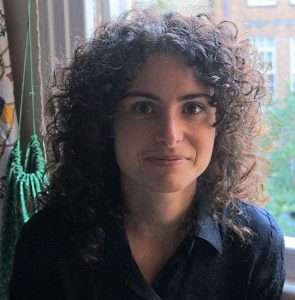 Chiara Marletto
Physicist, University of Oxford
Fundamental physics RECORDED
Chiara Marletto is a theoretical physicist and research fellow at Wolfson College, University of Oxford. Her research explores the foundations of physics, including quantum information, thermodynamics, quantum biology and constructor theory. Constructor theory investigates fundamental physical laws by asking which transformations are possible, which are impossible and why. Her book The Science of Can and Can’t introduces readers to this approach and its implications for understanding the physical world.
Marletto’s research provides a distinctive scientific perspective for an IMX conversation about change: understanding a system involves understanding not only its present state but also the transformations that its underlying laws permit. While constructor theory is not itself a framework for social reform, her work could enrich a discussion about possibility, information, physical constraints and innovation. Her contribution would be to explain the science on its own terms while allowing participants to explore carefully distinguished applications and analogies.
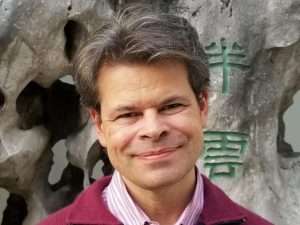
Dr. Stuart Cowan
Executive Director, Buckminster Fuller Institute
Regenerative systems design RECORDED
Dr. Stuart Cowan is a systems thinker and regenerative-design practitioner whose work connects ecological economics, finance, community development and complex systems. He holds a doctorate in applied mathematics from the University of California, Berkeley, and co-authored Ecological Design with Sim Van der Ryn. His professional experience includes roles with Ecotrust, the Smart Cities Council and sustainable investment initiatives. As executive director of the Buckminster Fuller Institute, his work builds upon Fuller’s commitment to comprehensive design that serves humanity without damaging the environment.
Cowan’s work focuses on developing regenerative communities and economies by connecting people, ecosystems, resources and institutions. He helped convene the Regenerative Communities Network, which supported bioregional approaches to restoration and development. At IMX, his experience could inform practical discussions about how communities can coordinate across sectors, develop regenerative financing and turn whole-systems concepts into collaborative projects with measurable outcomes.
 Kate Raworth
Economist and co-founder, Doughnut Economics Action Lab
Economic systems redesign (Courtesy of Frieda Werden, Wings.org) RECORDED
Kate Raworth is a British ecological economist known for developing Doughnut Economics, a framework that asks how economies can meet everyone’s essential needs without exceeding the planet’s ecological limits. Her professional background includes work with the United Nations Development Programme, Oxfam and the University of Oxford. Her 2017 book, Doughnut Economics: Seven Ways to Think Like a 21st-Century Economist, challenged conventional approaches to measuring economic success and introduced an alternative framework centered on human well-being and planetary health.
Through the Doughnut Economics Action Lab, which she co-founded, Raworth has helped make the framework available to communities, cities, businesses and educators seeking to rethink their economic models. The Doughnut combines a social foundation, representing essential human needs, with an ecological ceiling, representing environmental limits. For IMX, her work connects human rights with economic design and offers a framework for examining whether economic systems are delivering health, housing, education, participation and environmental sustainability.

American Civil Liberties Union
Nonprofit civil rights organization
Civil liberties and legal protections ONGOING PRESENTATIONS
Founded in 1920, the American Civil Liberties Union is a nonprofit, nonpartisan organization dedicated to defending individual rights and liberties guaranteed by the United States Constitution and federal law. Its work spans freedom of speech, privacy, religious liberty, voting rights, racial justice, reproductive freedom, immigration and criminal justice. Through litigation, legislative advocacy, public education and a nationwide network of affiliates, the ACLU challenges government actions it believes violate constitutional protections and works to expand the practical reach of civil liberties.
The ACLU’s work offers IMX an opportunity to examine the relationship between human rights principles and the institutions responsible for protecting them. Its legal cases and public education efforts illustrate how laws, government practices and institutional accountability influence individual freedom. A conversation with an ACLU representative could explore criminal justice reform, privacy in an increasingly digital society, constitutional protections and the practical steps communities can take when their rights are threatened.

Tax Justice Network
International research and advocacy organization
Financial transparency and taxation ONGOING ON-DEMAND
The Tax Justice Network is an international organization established in 2003 to research and challenge tax abuse, financial secrecy and economic structures that enable wealth to escape public accountability. Its work examines how tax havens, multinational corporate tax practices and opaque financial arrangements affect public revenues and inequality. Through research, data analysis, public communication and collaboration with civil society organizations, the network advocates changes to national and international tax systems.
The organization’s work connects financial systems to the practical realization of human rights. Tax revenues help fund healthcare, education, infrastructure and other public services, while financial secrecy can undermine public accountability. For IMX, the Tax Justice Network could contribute to a discussion about where public resources originate, how financial rules shape inequality, and what policy and institutional changes could make public financing more transparent and accountable. Its research could also help participants examine the financial conditions necessary to support large-scale systems change.
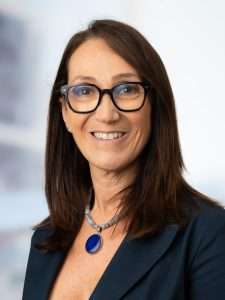 Dr. Maria Elena Bottazzi
Vaccine scientist and global health advocate
Accessible medicine and open science RECORDED ON DEMAND
Dr. Maria Elena Bottazzi is a Honduran-American microbiologist and vaccine scientist whose career focuses on developing affordable vaccines and improving access to medical technologies. She serves as senior associate dean at Baylor College of Medicine’s National School of Tropical Medicine and co-director of the Texas Children’s Hospital Center for Vaccine Development. Working with Dr. Peter Hotez and international partners, she helped develop an open-science COVID-19 vaccine technology used in vaccines including Corbevax and IndoVac. Her research also addresses neglected tropical diseases that disproportionately affect populations with limited access to healthcare.
Bottazzi’s approach offers a practical perspective on what it means to decolonize medicine: increasing research capacity, scientific collaboration and access to medical technologies in countries that have historically depended on wealthier nations for vaccine development and supply. Her work emphasizes international partnerships, technology transfer, affordability and training the next generation of scientists. For IMX, her experience could anchor a discussion about redesigning medical research and distribution so that life-saving technologies reach people according to public health needs rather than purchasing power alone.
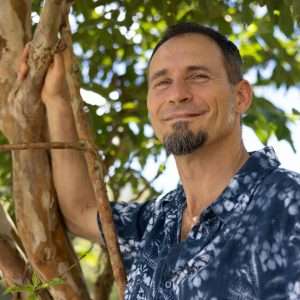 Dr. Alan Enzo
Founder, Permaculture Education
Ecological education and livelihoods RECORDED ON DEMAND
Dr. Alan Enzo is an ecologist, economist, management consultant and permaculture designer who founded Permaculture Education, an international nonprofit educational association, in 2007. His academic background includes studies in ecological economics, sustainable business, finance and accounting. Earlier in his career, he worked in emergency management, directing responses to environmental disasters, including oil spills, chemical incidents and natural disasters. His subsequent work has focused on ecological design, environmental restoration, disaster preparedness, self-reliance and regenerative community development.
Permaculture Education Center
Through Permaculture Education, Enzo has helped develop professional training in permaculture design, ecological systems, local economic revitalization and sustainable livelihoods. The organization supports educational programs, demonstration sites, instructors and opportunities for people seeking to develop careers in regenerative practices. His IMX contribution could connect ecological restoration with the transformation of education and employment, showing how people can acquire practical skills for food production, resource conservation, community resilience and locally rooted enterprise.
 Danny Schechter
Journalist, filmmaker and media reform advocate
Legacy profile — 1942–2015
Danny Schechter was an American journalist, filmmaker, author and media critic known as “The News Dissector,” a name he adopted during his work at Boston radio station WBCN. His career extended across independent radio, CNN, ABC News and documentary filmmaking. He won two Emmy Awards for his work at ABC’s 20/20 and co-founded Globalvision, a production company that produced South Africa Now and Rights & Wrongs: Human Rights Television. His reporting combined investigative journalism, media criticism and sustained attention to human rights and social justice.
Schechter believed journalism should examine the institutions and economic interests shaping public information rather than simply reproduce official narratives. In 1999, he founded MediaChannel.org, an initiative dedicated to media analysis and accountability. His work anticipated many of the questions facing independent journalism today: who controls public information, whose stories receive attention and how can media serve democratic participation? Schechter died on March 19, 2015. For IMX, his legacy could be featured through an archival presentation or a conversation with journalists and collaborators who carry forward his commitment to independent, public-interest media.
 Nick Bryant
Director, Epstein Justice
Investigative journalism and survivor advocacy Courtesy Marcel V. Reid, Whistleblower Life ON DEMAND
Nick Bryant is an American writer, investigator and child-protection advocate whose work has focused extensively on the exploitation of vulnerable children and institutional failures to protect them. He has written for academic and professional journals addressing child development, healthcare, poverty and social welfare, and co-authored America’s Children: Triumph or Tragedy. His investigations into Jeffrey Epstein’s network brought wider attention to questions about sexual exploitation, institutional accountability and the treatment of survivors. In 2015, Bryant published Epstein’s contact book online, generating further public and journalistic scrutiny. A name appearing in such a contact book does not, by itself, establish criminal wrongdoing.
As director of Epstein Justice, Bryant is involved in efforts focused on accountability and justice for people harmed by Epstein’s abuse and trafficking operation. His work connects investigative reporting with wider questions about institutional responsibility, the protection of children and access to justice. For IMX, his experience could contribute to a carefully moderated, survivor-centered discussion about how criminal justice, child protection, investigative journalism and institutional oversight can better prevent exploitation and respond to abuse. Such a conversation should distinguish established facts from allegations, respect survivors’ privacy and avoid treating unproven associations as evidence of guilt.