
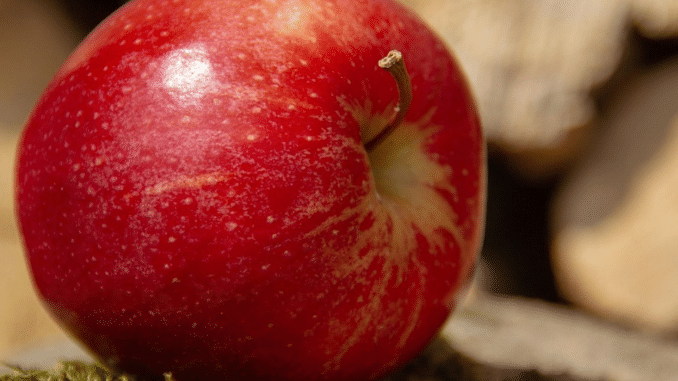
Feeding people well means caring for the whole journey—from living soil to the shared table.
A meal begins long before it reaches the table.
It begins with land, water, seeds and someone’s labour. It passes through decisions about finance, machinery, storage, transport and price. By the time we eat, we are participating in a system that has already shaped a landscape and someone else’s livelihood.
That is where a different food story begins: with the realization that producing food and feeding people well are different achievements.
Mechanization, refrigeration and trade have made enormous quantities of food available across great distances. But when success is measured mainly through volume and sales, the costs to soil, water, climate, workers and communities can disappear from the calculation. FAO’s work on the true cost of food documents these wider economic, social and environmental consequences.
Those costs do not disappear from our lives. They return through polluted environments, damaged ecosystems, insecure livelihoods and public expenses.
A better system begins by bringing the whole picture into view.
FOLLOW THE FOOD. FOLLOW THE CONSEQUENCES.
The climate bill runs through the entire journey. FAO estimates that agrifood systems accounted for 32% of human-caused greenhouse gas emissions in 2023, including farming, land-use change and activities before and after production.
Clearing land releases carbon. Livestock and flooded rice produce methane. Fertilised soils release nitrous oxide. Processing, packaging, refrigeration and transport add further emissions.
Ships, trucks and aircraft belong in this account. So do the energy used in storage and the food that spoils along the way.
Yet distance alone cannot tell us a food’s environmental footprint. What is produced, farming practices, transport mode, storage and waste all matter. Buying nearby can strengthen relationships and local livelihoods; its climate performance still needs to be assessed across the whole supply chain.
This changes the assignment. We need to improve how food is grown, protect ecosystems, reduce unnecessary journeys, coordinate deliveries and prevent waste together.
UNEP reports that food loss and waste account for an estimated 8–10% of annual global greenhouse gas emissions. Every preventable loss also wastes some of the land, water, energy and labour already invested.
Sometimes the next breakthrough is keeping a harvest useful.
Sometimes it is giving growers a dependable buyer.
And sometimes it is changing who gets to decide how the system works.
THE REDESIGN IS ALREADY GROWING
In Telangana, India, women working with the Deccan Development Society have connected those decisions.
Dalit and Indigenous women farmers organize through village collectives called sanghams. Their work brings together rainfed, biodiverse farming, seed conservation and community-led markets. Seed keepers including Molgeri Chandramma and Hussengari Suryakala have helped safeguard traditional crop diversity.
The connections continue beyond the field. Women elect a market committee, and prices are determined through consultation with farmers. A community production centre turns millets into foods people can prepare and eat. A consumer-farmer initiative allows households to support cultivation at the beginning of the season and receive produce after harvest.
Seeds, production, processing and distribution become parts of a community relationship.
That relationship can give farmers a stronger voice in what happens to their work.
But even a well-grown harvest needs somewhere to wait.
In Nigeria, social entrepreneur Nnaemeka Ikegwuonu has addressed that vulnerable interval through ColdHubs: solar-powered cold rooms located in markets and farming areas. Farmers and traders pay for storage space as they use it, gaining access without having to purchase an entire cold room themselves.
The purpose is practical: preserve perishable food and reduce the pressure to sell immediately before it spoils. The enterprise also provides refrigerated transport and reusable crates.
Here, the innovation connects agriculture with energy and infrastructure. Preserving food becomes a service that smaller producers can use.
Keeping food fresh, however, helps communities most when people can also reach it and afford it.
In Venezuela, Cecosesola demonstrates how production and distribution can be organized through cooperation. Founded in 1967, the network grew from community cooperatives into activities including agricultural production, processing and food markets, alongside other essential services.
Its members describe decision-making through dialogue and consensus. The work includes learning how to cooperate, resolve differences and take responsibility together.
The market becomes a place where relationships among growers, workers and households help shape economic decisions.
Cooperation also needs coordination. Orders must reach growers. Harvests must match demand. Someone must know what is available and where it needs to go.
Australian social entrepreneurs Kirsten Larsen and Serenity Hill helped develop the Open Food Network to address that connective work. Its open-source software supports producers, shops, cooperatives and food hubs in selling and distributing food through shared online systems.
A hub can bring several growers’ products into one ordering process and organize collection points or deliveries. Practical knowledge and software can then be adapted by others.
Their contribution makes another possibility visible: communities can share the tools for organizing food while retaining room to design their own enterprises.
These approaches work at different points in the journey. Their lessons can reinforce one another:
Care for the land. Share knowledge. Preserve the harvest. Coordinate demand. Give communities a meaningful stake.
BRINGING THE SYSTEM HOME
To begin locally, follow the food already moving through the community.
Bring growers, food workers, residents, existing retailers, school kitchens and local government into the same conversation. Identify what is being produced, what households need, what is being lost and where money and time are being spent.
Listen particularly to people who struggle to afford food, alongside those struggling to earn a living producing it. Their experience should shape the design.
Then choose a manageable first connection.
A group of growers might supply a weekly collection point. A school or community kitchen could provide dependable demand. Shared storage might protect an existing harvest. An ordering system could help buyers combine purchases and growers plan production.
A useful pilot connects a few willing partners around a clear need, using available buildings, skills and equipment. It should have someone responsible for daily operations, food safety, payments and maintenance.
Ownership needs equal attention. Agree who controls shared assets, how decisions are made, how farmers and workers are paid, and how disagreements will be resolved. Where community ownership is appropriate, those commitments should be built into the enterprise from the beginning.
The finances must be honest. Affordable food and fair livelihoods both require support. Where sales cannot cover the full cost of serving lower-income households, identify the public funding, institutional purchasing or other subsidy that will close the gap. Budget for transition costs and maintenance, so farmers and workers are supported while practices change.
As the pilot develops, growers can test locally suitable ways to protect soil, diversify production and use water and nutrients efficiently, supported by relevant farming knowledge and research. Distribution can improve through coordinated routes, appropriate storage and better demand planning.
Measure what changes: food reaching households, losses avoided, farmer earnings, worker pay, operating costs and environmental performance. Publish the difficulties as well as the successes. Another community should be able to learn from the work without repeating every mistake.
The wider goal is a network of capable communities, connected through shared learning and fair trade. Regional production and interregional supply can complement one another, especially where climate, seasons or land availability limit what can be grown.
A DIFFERENT KIND OF ABUNDANCE
The opportunity is to make nourishment, viable livelihoods and ecological recovery part of the same design.
A seed bank can support a farmer. A dependable buyer can support a growing season. Shared storage can protect its harvest. A cooperative market can help carry that food into people’s lives.
Each connection strengthens the possibility of the next.
For Mobilized, the work is to make these connections understandable and useful: show how systems operate, examine results and help communities find people with experience to share.
A meal begins long before it reaches the table.
A better food system begins when we take responsibility for that whole journey—together.