
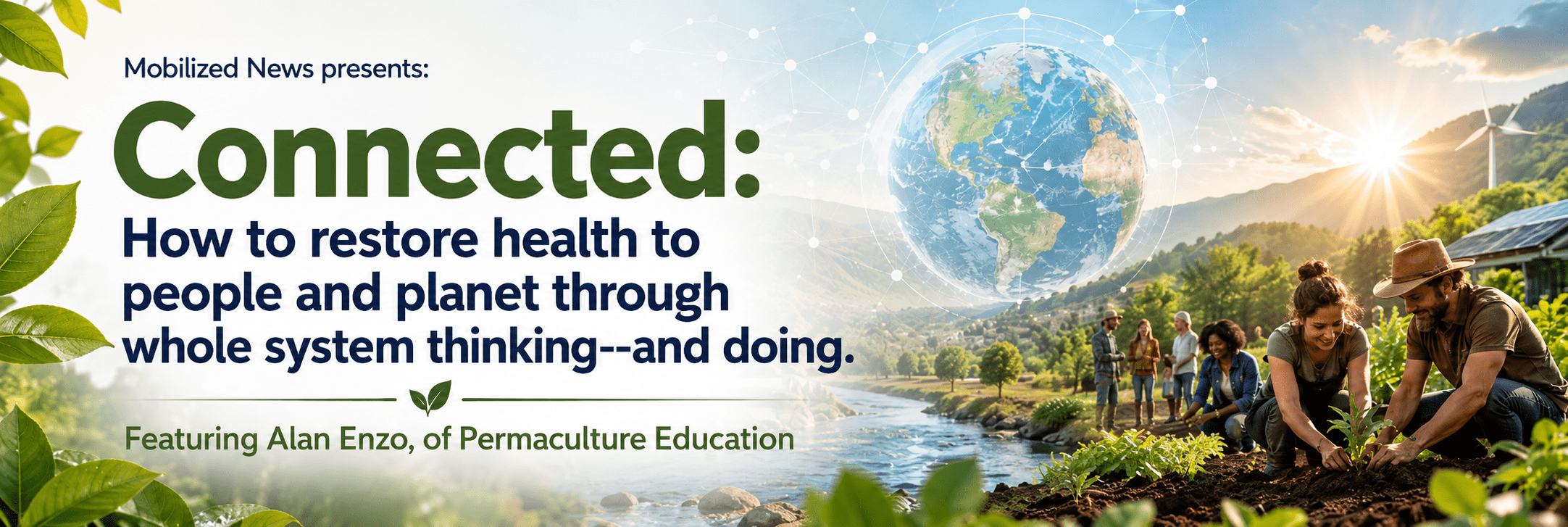
CONNECTED: The benefits of whole system design
4 4 people viewed this event.
Why this matters
Most problems are treated in isolation, even though they are connected. Holistic system design looks at relationships: energy, food, water, housing, transportation, health, economics, culture, and governance. It helps communities stop fixing symptoms and start redesigning conditions.
Benefits of discovery
Discovery reveals hidden connections, duplicated efforts, wasted resources, and opportunities for collaboration. It helps people see the whole system before launching disconnected projects.
Discover
- What problem are we trying to solve, and what is causing it?
- What systems are connected to this issue?
- Who is affected, and who is usually left out?
- What are the unintended consequences of current solutions?
- Where are resources being wasted?
- What would success look like across the whole system?
- Who needs to be in the room?
- What local assets are already available?
- What can be redesigned instead of repaired?
- How do we move from isolated programs to connected action?
- What feedback loops keep the problem alive?
- What incentives need to change?
- How do we measure real improvement?
- What can nature teach us about design?
- What is the smallest useful prototype we can begin with?