
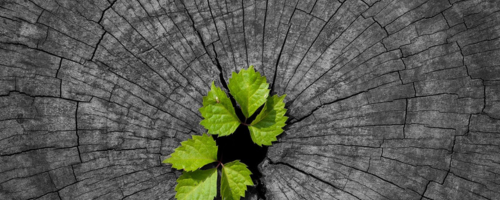
For decades, progress has been measured by how fast economies expand. But in a world of ecological limits and social strain, that assumption is being quietly — and urgently — questioned.
The big picture
Economic growth was designed as a proxy for wellbeing.
Over time, it became the goal itself.
GDP counts production, consumption, and transactions — but it ignores what makes life sustainable: ecological health, social stability, and long-term resilience.
The result: economies can “grow” while communities and ecosystems degrade.
Why growth is failing us
Growth-focused systems reward:
- Extraction over regeneration
- Speed over resilience
- Quantity over quality
They treat nature as an input, not a living system — and people as economic units, not participants in shared wellbeing.
That model worked temporarily. It doesn’t work indefinitely.
Doughnut Economics, in practice
Doughnut Economics offers a different framework.
It asks two questions:
- Are people’s basic needs being met?
- Are we staying within planetary boundaries?
Cities around the world — from Amsterdam to Bogotá — are already using the Doughnut to redesign housing, food systems, mobility, and public services.
The goal isn’t endless expansion.
It’s thriving within limits.
Beyond GDP
If GDP doesn’t tell us whether people or ecosystems are healthy, what does?
Regenerative metrics focus on:
- Ecological regeneration
- Community resilience
- Access to essentials
- Long-term wellbeing
- Social participation
These measures don’t reject economics.
They redefine what success looks like.
The problem with “green growth”
Green growth promises we can keep expanding — just more cleanly.
But efficiency gains often:
- Increase total consumption
- Shift impacts elsewhere
- Delay deeper structural change
Without redefining success, green growth risks becoming a sustainability veneer on the same extractive model.
What regeneration actually means
Regeneration goes beyond “doing less harm.”
It means systems that:
- Restore ecosystems
- Strengthen communities
- Circulate resources
- Adapt through feedback
Nature doesn’t grow forever.
It regenerates.
Why this shift is happening now
Climate limits are no longer theoretical.
Social inequality is destabilizing economies.
Public trust in growth narratives is eroding.
The question is no longer whether growth has limits —
but whether our systems can evolve in time.
What comes next
The next economic chapter won’t be written by bigger numbers.
It will be shaped by:
- Cities designing for wellbeing
- Policies aligned with planetary reality
- Media that explains trade-offs honestly
- Metrics that reward regeneration, not extraction
The bottom line
Growth was a tool.
We treated it like a destination.
Regeneration is different.
It’s not about getting bigger —
it’s about staying alive, together.
Mobilized News
Inspired by Nature — the original network.