
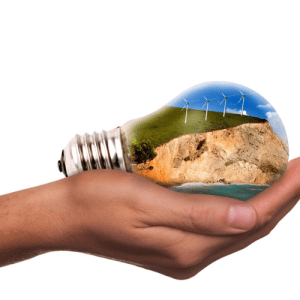
 From extraction and exploitation to local ownership, circular production and shared prosperity.
- We mine it.
- Cut it.
- Pump it.
- Process it.
- Ship it halfway around the world.
- Turn it into products.
- Use those products.
- Throw them away.
Then start extracting all over again.
What if the problem isn’t a shortage of resources?
What if the problem is the system we built to use them?
What do we have now?
For generations, much of the global economy has operated on a simple model:
Take → make → sell → waste → repeat.
- Resources are frequently extracted in one place.
- Processed somewhere else.
- Manufactured somewhere else.
- Sold somewhere else.
- And the financial value often accumulates far from the communities where the resources originated.
- The environmental damage stays behind.
The waste comes back.
The cycle begins again.
The numbers are difficult to ignore.
Global natural-resource extraction has tripled over the past five decades. Without major changes, extraction could rise another 60% by 2060. Resource extraction and processing account for more than 60% of planet-warming emissions, while high-income countries consume roughly six times more materials than low-income countries.
We have built an economy that turns nature into products—and products into waste.
Why do we still have it?
Because the system was designed for extraction.
- Not circulation.
- For scale.
- Not resilience.
- For selling more.
- Not making things last.
- For exporting raw resources.
- Not necessarily creating local prosperity.
Many resource-rich countries still export relatively low-value commodities while importing higher-value finished goods.
In 2021–2023, 95 of 143 developing economies remained commodity-dependent, according to UN Trade and Development. UNCTAD argues that processing, industrialization, skills and domestic value creation are essential if resource-rich countries are to capture more of the wealth generated by their resources.
And there is another legacy we cannot ignore.
Many mineral and resource systems developed through colonial patterns in which land, labor and natural wealth were controlled from elsewhere. Those patterns have not completely disappeared.
More than half of known critical-mineral reserves are located on or near Indigenous lands. Current UN work emphasizes Indigenous self-determination, free, prior and informed consent, equitable benefit-sharing and Indigenous-led development rather than repeating old extractive relationships with new “green” technologies.
Changing the material without changing the system is not enough.
An electric economy can still be extractive.
A renewable economy can still concentrate wealth.
A circular economy can still exclude communities.
The real transformation is about materials AND ownership.
Now flip the script
Instead of:
Extract → Manufacture → Consume → Discard
Build:
Design → Produce → Use → Repair → Reuse → Remanufacture → Recycle → Produce Again
And wherever practical:
Own it locally.
Make it locally.
Repair it locally.
Recover it locally.
Keep the value circulating locally.
What do we actually want?
Imagine communities becoming producers instead of merely consumers.
Buildings become material banks rather than future demolition waste.
Old electronics become sources of metals and components.
Plastic waste becomes feedstock for new local products.
Furniture is repaired and remanufactured.
Construction materials are recovered and resold.
Forests generate sustainable livelihoods for the people who steward them.
Local manufacturing uses global knowledge without requiring every product to travel around the planet.
Products are designed to be repaired, upgraded and taken apart.
Communities have meaningful ownership of the resources beneath and around them.
The goal is not complete isolation.
A town cannot produce every metal, mineral, machine or material it needs.
The better principle is:
Local where possible. fair and traceable where global.
Move as much ownership, processing, fabrication, repair, recovery and economic value as practical closer to the people using and stewarding the resources.
It is already happening
Mexico — communities owning the forest economy
Mexico provides one of the world’s most important alternatives to outside-controlled resource extraction.
Large areas of Mexican forests are held through ejidos and comunidades, forms of social ownership in which communities collectively manage resources.
Community forestry enterprises can harvest timber, operate sawmills, manufacture products, create jobs and reinvest proceeds locally while managing the forests themselves.
Recent World Bank work continues to strengthen community enterprises, Indigenous participation, sustainable forest management and local economic opportunities.
The flip:
From communities supplying somebody else’s timber industry to communities becoming owners, producers and stewards.
Cleveland — the building becomes the mine
Why continually extract new materials when usable materials already surround us?
Cleveland’s circular-economy work includes Rebuilders Xchange, which salvages building materials and furniture, resells them, remanufactures reclaimed resources and connects a local marketplace.
The initiative has supported more than 900 vendors, creating income opportunities while giving residents and builders access to lower-cost reclaimed materials.
The flip:
Demolition waste becomes inventory.
The city becomes a materials mine.
New York City — building a local materials supply chain
In August 2026, New York City launched a Circular Construction Hub in Brooklyn.
Instead of construction materials automatically becoming waste, the pilot recovers, sorts, stores and redistributes them for reuse.
The experiment is specifically testing whether cities can build functioning local supply chains around recovered construction materials.
The flip:
Take a building apart instead of simply knocking it down.
Then build again with what you already have.
Ghana + Nigeria — turning local waste into local industry
New PET recycling plants being developed in Ghana and Nigeria demonstrate another part of the model.
The facilities are expected to convert locally collected plastic into food-grade recycled PET resin. IFC says around 90% of their feedstock is expected to come from local small businesses collecting plastic, supporting more than 4,000 direct and indirect jobs while reducing reliance on imported virgin resin.
This is not yet community ownership.
But it demonstrates something important:
Waste can become domestic industrial feedstock instead of an imported-resource problem.
Fab city — global knowledge. local production.
The growing Fab City movement is experimenting with an entirely different relationship between production and place.
Its philosophy is essentially:
Move information globally. Move materials less.
Cities and communities share designs, knowledge and production methods globally while developing local fabrication, circular production and maker infrastructure.
The network now provides tools for communities to map local resources, build production ecosystems, prototype products and connect globally without surrendering local agency.
The flip:
Instead of shipping finished objects everywhere:
Send the knowledge.
Make more of the object locally.
The big shift
This is bigger than recycling.
Recycling asks:
What do we do with the waste?
Whole-system design asks:
Why did we create waste in the first place?
And an equitable materials economy asks:
Who should own the resources, infrastructure and value?
How do we get there?
Start with one community, one material and one supply chain.
1. Map the materials. Find out what enters your community, what leaves, what gets discarded and what businesses depend on imported materials.
2. Map the ownership. Ask who owns the land, minerals, forests, factories, recycling facilities, distribution systems and intellectual property.
3. Find the leaks. Where are materials, jobs and money unnecessarily leaving the community?
4. Build local capacity. Develop repair shops, maker spaces, fabrication centers, recycling facilities, deconstruction businesses, remanufacturing operations and cooperatives.
5. Design for circularity. Require products and buildings to be durable, modular, repairable, reusable and recyclable.
6. Buy local first. Governments, schools, universities, hospitals and large employers can create guaranteed markets for locally produced and recovered materials.
7. Finance ownership. Use cooperatives, community investment, public banks, credit unions, development funds and blended finance so local people can own productive assets.
8. Share the knowledge. Open designs, manufacturing knowledge and successful models so another community does not have to reinvent the wheel.
What stands in the way?
Cheap virgin materials
Extraction often appears cheaper because environmental and social damage is not reflected in the price.
Flip it: Make producers responsible for the full life of products and create markets for secondary materials.
Capital
Communities may have resources but not the financing required to process them.
Flip it: Finance productive local infrastructure—not simply consumption.
Scale
Large corporations have enormous purchasing, distribution and lobbying advantages.
Flip it: Aggregate community demand, cooperative purchasing and regional production networks.
Regulations
Building codes, procurement rules and product standards sometimes unintentionally favor new materials over reused ones.
Flip it: Update standards so safe salvaged and remanufactured materials can compete.
Portland, Oregon is already demonstrating this by allowing qualifying salvaged structural lumber to be incorporated into new construction.
Ownership
Local production without local ownership can simply recreate the same extraction system on a smaller geographic scale.
Flip it: Give communities equity, governance rights, benefit-sharing and decision-making power.
And policy is beginning to change
Europe’s emerging product rules increasingly emphasize durability, repairability, recycled content and information about what products contain.
The EU’s Ecodesign framework includes plans for Digital Product Passports, while new packaging rules are designed to expand recycled-content requirements and reduce reliance on virgin raw materials.
That’s an important change in thinking:
A product should not become anonymous waste the moment we buy it.
We should know what it contains.
Where it came from.
How to repair it.
How to take it apart.
And where its materials go next.
The question changes everything
Don’t only ask:
Where did this product come from?
Ask:
- Who owns the resources?
- Who benefited from extracting them?
- Who did the processing?
- Where did the jobs go?
- Can it be repaired?
- Can the materials be recovered?
- Could it have been produced closer to home?
- Could the people supplying the resources own part of the system?
Flip the script
The old system says:
Extract more.
The new system asks:
How much do we already have?
The old system says:
Ship the resource out.
The new system says:
Create value where the resource lives.
The old system says:
Throw it away.
The new system says:
There is no “away.”
The old system treats communities as sources of labor, land and materials.
The new system treats them as:
Owners.
Producers.
Designers.
Stewards.
Beneficiaries.
What if every community asked one question?
What are we throwing away, shipping away or giving away that could become the foundation of local prosperity?
That is where the materials revolution begins.
Not simply with a different material.
With a different relationship between people, place, production and ownership.